Processing....

Executive Gov

Digital News Coverage of Government Contracting and Federal Policy Landscape
Sticky Logo
  • Home
  • Acquisition & Procurement
  • Agencies
    • DoD
    • Intelligence
    • DHS
    • Civilian
    • Space
  • Cybersecurity
  • Technology
  • Executives
    • Profiles
    • Announcements
    • Awards
  • News
  • Articles
  • About
  • Wash100
  • Contact Us
    • Advertising
    • Submit your news
    • Jobs
Logo
DoD/News
Army to Award Hanwha Defense USA Lease at Pine Bluff Arsenal
by Kristen Smith
Published on January 29, 2026
Hanwha Defense USA logo. The company was selected for an enhanced use lease at Pine Bluff Arsenal.

The Army has selected Hanwha Defense USA for an enhanced use lease at Pine Bluff Arsenal in Arkansas as part of a broader effort to modernize the munitions supply chain and strengthen domestic production of critical energetics.

Hanwha plans to invest about $1.3 billion in the project, which is expected to generate roughly 200 skilled jobs, the service said Wednesday. The lease would support the construction and operation of a new facility focused on producing key ingredients used in explosives and propellants, materials that underpin munitions such as 155mm artillery rounds. Final terms remain subject to lease negotiations.

Brent Ingraham, assistant secretary of the Army for acquisition, logistics and technology, said the partnership reflects a model the Army intends to use to reinforce both commercial and organic industrial base capacity.

Army to Award Hanwha Defense USA Lease at Pine Bluff Arsenal

The 2026 Army Summit, hosted by the Potomac Officers Club on June 18, will convene senior Army leaders and industry partners to examine how the service is restructuring its approach to resources, contracting and modernization. Discussions will focus on supporting the Army’s 2030 goals, including continued progress toward establishing and sustaining a unified network. Register now.

Table of Contents

  • What Is the Enhanced Use Lease Program?
  • What Other US Energetics Efforts Is Hanwha Pursuing?

What Is the Enhanced Use Lease Program?

The Army’s enhanced use lease program allows the service to lease underutilized installation property to private-sector partners, with proceeds potentially reinvested into critical infrastructure priorities.

The Pine Bluff lease follows a series of Army efforts to expand production capacity and modern manufacturing across the defense industrial base.

In early 2025, the Army began construction of a new ammunition manufacturing facility at the Lake City Army Ammunition Plant in Missouri to produce 6.8mm rounds supporting the Next Generation Squad Weapon program. Maj. Gen. John Reim said at the time that battlefield success begins in production facilities.

More recently, the Army partnered with AMTEC to open a new 40mm grenade production line and indoor test range in Janesville, Wisconsin. Reim said the investment is part of the Army’s largest infrastructure and munitions production push since World War II, noting that billions have been directed into modernization since 2022.

What Other US Energetics Efforts Is Hanwha Pursuing?

Hanwha has been expanding its U.S. industrial partnerships tied to ammunition and energetics production.

In October 2025, Hanwha Aerospace and Global Military Products formed a strategic partnership to pursue Department of War opportunities in ammunition and energetics. Hanwha Defense USA Chief Operating Officer Mike Smith said the effort is intended to strengthen supply chain resilience while delivering advanced munitions capabilities for U.S. and allied forces.

News/Space
Space Force Launches GPS III-9 Satellite to Strengthen Global Positioning Capabilities
by Miles Jamison
Published on January 29, 2026
U.S. Space Force seal. The U.S. Space Force launched the GPS III Space Vehicle 09 satellite aboard a SpaceX Falcon 9 rocket.

The U.S. Space Force deployed the Global Positioning System III Space Vehicle 09, or SV09, satellite into orbit on Jan. 27 aboard a SpaceX Falcon 9 rocket from Cape Canaveral Space Force Station in Florida.

Space Force Launches GPS III-9 Satellite to Strengthen Global Positioning Capabilities

Lockheed Martin is a major sponsor of the Potomac Officers Club’s 2026 Air and Space Summit on July 30, where Air Force, Space Force and industry leaders will gather to address evolving challenges across the air and space domains. Get your tickets now.

Table of Contents

  • What Is the Purpose of the GPS III-9 Satellite?
  • What Are the Details of GPS III-9?
  • How Was the Launch Executed?
  • Previous GPS III Missions

What Is the Purpose of the GPS III-9 Satellite?

The Space Systems Command said Wednesday GPS III-9 will provide the GPS constellation with an additional M-Code satellite that will significantly enhance positional accuracy and resistance to jamming, boosting system resilience, and geolocation and navigation capabilities. This strengthens weapon system performance across every operational theater.

What Are the Details of GPS III-9?

The GPS III-9 satellite was developed by Lockheed Martin and delivered under the National Security Space Launch, or NSSL, program. It is named in honor of Col. Ellison Onizuka, a NASA astronaut and Air Force flight test engineer who died in the space shuttle Challenger disaster 40 years ago.

How Was the Launch Executed?

The mission was completed in roughly two months, following a rapid launch timeline enabled by NSSL’s flexible acquisition and scheduling processes. The campaign reflected close coordination among Space Systems Command, Combat Forces Command, Space Launch Delta 45 and SpaceX.

Previous GPS III Missions

The SV09 launch builds on previous missions that aim to strengthen GPS capabilities, including the successful launch of Rapid Response Trailblazer-1 in December 2024 and GPS III-7, or SV08, in May 2025.

News/Space
NASA Conducts Cold Flow Testing of Nuclear Propulsion for Future Space Missions
by Elodie Collins
Published on January 29, 2026
Deep space missions. NASA is developing a nuclear propulsion technology for future deep space missions

NASA has completed its cold-flow test campaign of a nuclear propulsion technology that could power future missions to the moon and Mars.

The space agency said Tuesday that it conducted over 100 tests on the flight-like engineering development unit built by BWX Technologies.

Table of Contents

  • What Did NASA Discover From Its Space Nuclear Propulsion Test?
  • Why Is NASA Developing Space Nuclear Propulsion?

What Did NASA Discover From Its Space Nuclear Propulsion Test?

The cold flow test, carried out at the NASA Marshall Space Flight Center in Huntsville, Alabama, over several months in 2025, simulated operational fluid-dynamic responses of the engineering development unit.

The researchers also validated that the reactor design is not prone to destructive shaking or oscillations typically caused by moving fluids.

“This test series generated some of the most detailed flow responses for a flight-like space reactor design in more than 50 years and is a key stepping stone toward developing a flight-capable system,” shared Jason Turpin, manager of the Space Nuclear Propulsion Office at NASA Marshall. “Each milestone brings us closer to expanding what’s possible for the future of human spaceflight, exploration and science.”

Why Is NASA Developing Space Nuclear Propulsion?

Nuclear propulsion systems eliminate the need for solar power, allowing spacecraft to travel farther away from the sun, according to NASA. Moreover, the propulsion technology can also reduce travel times and increase a spacecraft’s science payload capacity.

“By shortening travel times and expanding mission capabilities, this technology will lay the foundation to explore farther into our solar system than ever before,” commented Greg Stover, acting associate administrator of the Space Technology Mission Directorate at NASA headquarters in Washington, D.C.

Artificial Intelligence/News
DOE’s Argonne National Lab Forges Partnership With Riken, Fujitsu, NVIDIA to Advance AI-Enabled Research
by Elodie Collins
Published on January 29, 2026
Argonne National Laboratory logo. ANL signed an MOU with Riken, Fujitsu and NVIDIA

Argonne National Laboratory has signed a memorandum of understanding with research organization Riken and technology companies Fujitsu and NVIDIA to advance artificial intelligence and high performance computing use for discovery science and to address energy and national security challenges. 

Table of Contents

  • What Is the Goal of the Argonne-Led Partnership?
  • What Are Other DOE Initiatives That Support the White House’s Genesis Mission?

What Is the Goal of the Argonne-Led Partnership?

The Department of Energy national lab said Wednesday that the organizations will jointly develop new computing architectures that combine modeling and simulation with AI capabilities to support research. Additionally, the organization will deploy AI and robotics to automate experiments.

“This collaboration represents a pivotal step forward in harnessing the transformative potential of AI and HPC to address pressing scientific challenges in energy, national security and fundamental research,” stated ANL Director Paul Kearns. 

DOE’s Argonne National Lab Forges Partnership With Riken, Fujitsu, NVIDIA to Advance AI-Enabled Research

Learn all about how the federal government and industry are implementing AI and automation to support operations and various missions at the Potomac Officers Club’s 2026 Artificial Intelligence Summit on March 18. The sixth annual AI Summit will feature top AI leaders from the Department of War and other agencies to discuss AI strategies and use cases and to network with current and future industry partners. Click here to secure your tickets.

Other areas of focus under the MOU include the development of a shared software ecosystem and combining AI capabilities with quantum computing to aid scientific research.

Riken is also working with Fujitsu and NVIDIA to build a new supercomputer for Japan. Called FugakuNEXT, a successor to Fugaku, which was declared the world’s fastest supercomputer in 2020. 

What Are Other DOE Initiatives That Support the White House’s Genesis Mission?

The initiative aligns with President Donald Trump’s Genesis Mission, a national effort to spur scientific discovery with AI. 

In December, DOE announced a $320 million investment for the development of the Genesis Mission’s AI capabilities. The investment provides funding for 14 projects in robotics, automated laboratories and autonomous experiments.

News/Space
GAO Urges Greater Transparency, Realism in SDA Missile Tracking Satellite Program
by Miles Jamison
Published on January 29, 2026
GAO logo. GAO urged SDA to enhance transparency and realism in its missile-tracking effort.

The Government Accountability Office is raising concerns about the Space Development Agency’s ability to deliver planned missile warning and tracking capabilities under the Department of War’s Proliferated Warfighter Space Architecture, or PWSA.

GAO Urges Greater Transparency, Realism in SDA Missile Tracking Satellite Program

Secure your spot at the 2026 Air and Space Summit on July 30. This Potomac Officers Club event brings together top military and private sector officials to discuss the future of air and space operations.

In a report published Wednesday, GAO said the department’s plan to deploy a large constellation of satellites to detect and track missile threats faces execution risks stemming from technology maturity, scheduling and cost-management challenges.

Table of Contents

  • What Risks Did GAO Identify?
  • What Did GAO Recommend?

What Risks Did GAO Identify?

GAO found that SDA has taken an overly optimistic view of the maturity of several critical technologies, including spacecraft that require mission-specific design changes. As a result, contractors have had to complete additional, unexpected work, contributing to schedule delays.

The report also said the department relies primarily on individual contractor schedules rather than an integrated program-level timeline, limiting its ability to assess how changes could affect satellite launches and overall program delivery.

Beyond scheduling issues, GAO identified shortcomings in requirements development and cost transparency. Combatant commands reported limited insight into how requirements are established and whether planned capabilities align with operational needs. In addition, incomplete cost data from early tranches has prevented DOW from producing a reliable life-cycle cost estimate, increasing uncertainty about the architecture’s long-term affordability.

What Did GAO Recommend?

To address the risks, GAO issued six recommendations aimed at enhancing technology readiness assessments, strengthening collaboration with warfighters, establishing an architecture-wide schedule, producing a more credible cost estimate and requiring more robust cost data in future contracts. The DOW concurred with five recommendations and partially concurred with one.

Artificial Intelligence/Executive Moves/News
Kevin Murphy Named NASA’s Acting Chief AI Officer, CDO
by Jane Edwards
Published on January 28, 2026
Kevin Murphy. The NASA chief data science officer assumed the role of acting chief AI officer and acting chief data officer.

NASA has appointed Kevin Murphy, the agency’s chief data science officer, as acting chief artificial intelligence officer, or CAIO, and acting chief data officer, or CDO.

Kevin Murphy Named NASA’s Acting Chief AI Officer, CDO

NASA’s leadership moves signal how seriously the federal government is positioning itself around AI. As agencies strengthen AI and data leadership, industry and government leaders will gather to discuss what’s next for policy, innovation and mission delivery. Register now to join the conversation at the Potomac Officers Club’s 2026 Artificial Intelligence Summit on March 18.

Murphy announced his new roles in a LinkedIn post.

His appointment comes after David Salvagnini announced plans to step down as NASA’s CAIO and CDO in a LinkedIn post two months ago.

Salvagnini, who assumed responsibility as the space agency’s first CAIO in May 2024, said in the post that he started his transition under the Deferred Resignation Program on Oct. 31 and would retire after over four decades of federal service in the spring of 2026.

Table of Contents

  • Who Is Kevin Murphy?
  • What Are NASA’s AI Efforts?

Who Is Kevin Murphy?

Murphy has been with NASA for over 17 years, according to his LinkedIn profile.

He has been serving as chief data science officer within NASA’s Science Mission Directorate since 2021. In this capacity, he oversees the strategic development of data, computing and analysis systems that advance scientific and engineering innovation across the agency. He leads the agency’s High-End Computing Capability portfolio and works across five science divisions to advance machine learning, cloud, data management and analysis platforms for scientific data.

He helped establish the Commercial Smallsat Data Acquisition Program and led the Satellite Needs Assessment Working Group.

Murphy spent six years at NASA’s Goddard Space Flight Center, where he served as a system architect.

What Are NASA’s AI Efforts?

NASA has leveraged AI through strategic partnerships with industry. In August, the agency partnered with Google to develop a system that uses natural language processing and machine learning to support diagnosis and medical decision-making for astronauts during missions.

In 2023, IBM and NASA’s Marshall Space Flight Center collaborated to advance the use of AI for extracting insights from Earth observation data as part of the agency’s Open-Source Science Initiative.

Building on the work, IBM and NASA unveiled an open-source AI model, called Surya, designed to predict solar weather.

Government Technology/News
Commerce, USA Rare Earth Collaborate to Strengthen Domestic Chip Supply
by Jane Edwards
Published on January 28, 2026
Barbara Humpton. The USA Rare Earth CEO commented on the company's collaboration with Commerce’s CHIPS Program Office.

The Department of Commerce’s CHIPS Program Office and USA Rare Earth have signed a non-binding letter of intent to provide the company with up to $1.6 billion in funding to strengthen the domestic semiconductor ecosystem by expanding the production of rare earth elements and magnets.

The National Institute of Standards and Technology said Monday the agreement includes up to $277 million in direct funding and a senior secured loan of up to $1.3 billion under the CHIPS and Science Act to advance rare earth mining, processing and magnet manufacturing capabilities in the U.S.

Table of Contents

  • How Will the Commerce CHIPS Program Support USA Rare Earth’s Projects?
  • What Did USA Rare Earth CEO Barbara Humpton Say About the Government Partnership?
  • How Does DOE Support USA Rare Earth’s Domestic Supply Chain Efforts?

How Will the Commerce CHIPS Program Support USA Rare Earth’s Projects?

According to NIST, the proposed funding will support the company’s rare earth project in Round Top, Texas, and the expansion of its magnet manufacturing operations in Stillwater, Oklahoma.

The Round Top mine is expected to kick off commercial production in 2028. It will extract 40,000 metric tons per day of rare earth and critical mineral feedstock and process 8,000 metric tons per annum, or TPA, of third-party mixed rare earth carbonate and other elements.

USAR expects the Oklahoma manufacturing project to boost the production of neodymium iron boron, or NdFeB, magnets to 10,000 TPA while supporting strip-casting capacity of 10,000 TPA for rare earth metals and alloys.

“USA Rare Earth’s heavy critical minerals project is essential to restoring U.S. critical mineral independence,” said Secretary of Commerce Howard Lutnick. “This investment ensures our supply chains are resilient and no longer reliant on foreign nations.”

What Did USA Rare Earth CEO Barbara Humpton Say About the Government Partnership?

“This landmark collaboration with the U.S. Government represents a transformative step in USAR’s mission to secure and grow a resilient, independent domestic rare earth value chain,” USA Rare Earth CEO Barbara Humpton said in a statement.

Humpton, a five-time Wash100 awardee, added that the company appreciates the federal government’s support and recognition of the strategic importance of rare earth materials and permanent magnets. She noted that the public and private backing positions USA Rare Earth to accelerate development of domestic capabilities critical to U.S. national security, global competitiveness and future technologies.

USAR announced that it raised $1.5 billion through a private investment in public equity transaction with Inflection Point and other strategic investors.

How Does DOE Support USA Rare Earth’s Domestic Supply Chain Efforts?

In addition to its work with Commerce, USAR also signed an LOI with the Department of Energy’s National Energy Technology Laboratory to support the advancement of heavy rare earth element separation technologies at the company’s Wheat Ridge laboratory and Round Top deposit. 

Under the partnership, DOE will support the development of digital twin capabilities to advance rare earth separation technologies and help establish a mine-to-magnet supply chain in the U.S.

DoD/News
Adm. Daryl Caudle Outlines Navy Hedge Strategy, New Fighting Instructions
by Miles Jamison
Published on January 28, 2026
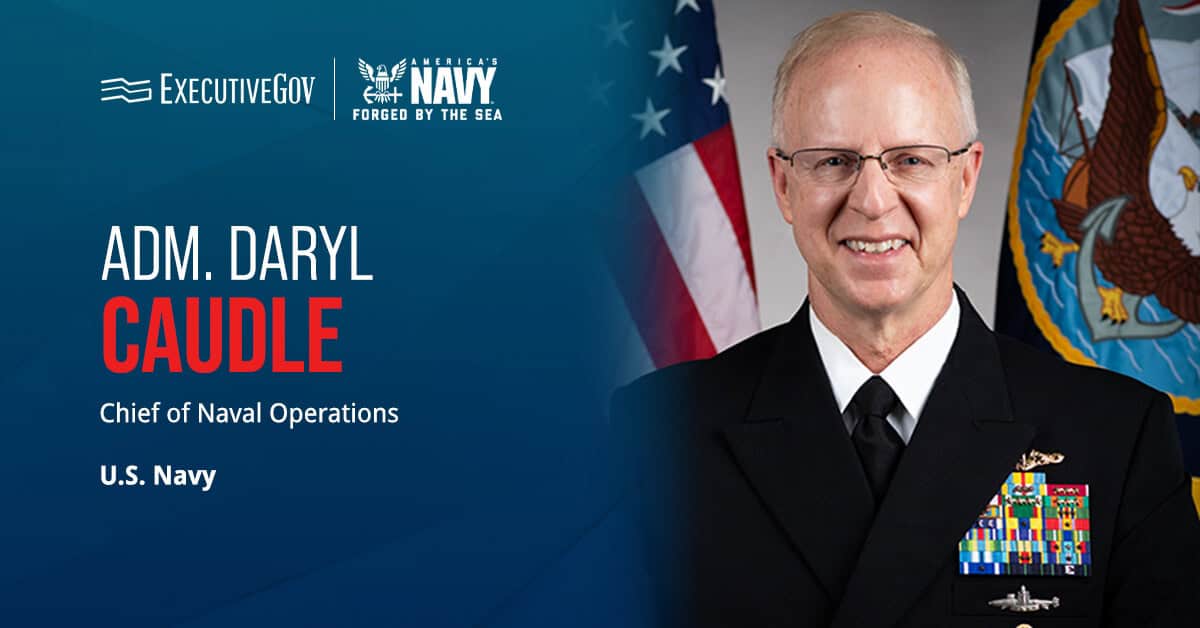
Naval Operations Chief Adm. Daryl Caudle. Adm. Daryl Caudle has outlined a new Hedge Strategy for the U.S. Navy.

Adm. Daryl Caudle, the U.S. Navy’s chief of naval operations, outlined a new strategic vision for the service, emphasizing adaptability, industrial revitalization and a full-spectrum Hedge Strategy to address a more complex global security environment.

Adm. Daryl Caudle Outlines Navy Hedge Strategy, New Fighting Instructions

Register now for the Potomac Officers Club’s 2026 Navy Summit on Aug. 27 to join senior Navy, defense and industry leaders as they discuss emerging technologies and modernization priorities shaping the future of naval operations. 

Table of Contents

  • What Challenge Is the Navy Facing?
  • What Are the Navy Fighting Instructions?
  • What Is the Hedge Strategy?
  • What Comes Next?

What Challenge Is the Navy Facing?

Speaking Tuesday at the APEX Defense forum, Caudle said the Navy is operating in an era defined by great power competition, asymmetric threats and rapid technological change. He pointed to years of underinvestment in shipyards, munitions production and infrastructure as factors that have strained the U.S. industrial base, at a time when adversaries are advancing their capabilities at speed.

What Are the Navy Fighting Instructions?

In response, Caudle said he will soon release the U.S. Navy Fighting Instructions, a new strategic framework to guide future investments, force design, strategic priorities and policy decisions. The guidance will be built around three priorities—foundry, fleet and fight—and is intended to ensure the Navy can operate effectively across the full spectrum of conflict. Guided by these priorities, the Fighting Instructions aim to strengthen homeland defense, sustain global deterrence and safeguard national prosperity.

What Is the Hedge Strategy?

At the core of the Fighting Instructions is a Hedge Strategy that combines advanced, high-end platforms with scalable, cost-effective capabilities. Designed to operate within fiscal, industrial and operational limits, the approach acknowledges those constraints while maintaining a lethal, flexible and resilient fleet.

Rather than shaping the force around a single contingency, the Hedge Strategy seeks to preserve the Navy’s ability to respond across a range of conflict scenarios. It relies on modular force packages, including tailored forces and tailored offsets, that integrate manned, unmanned, autonomous and logistical systems to support operations across both high- and lower-probability scenarios.

What Comes Next?

Caudle said the strategy will be implemented through initiatives such as tailored force development, readiness reforms and updated deterrence concepts, all designed to give commanders adaptable options across theaters.

Government Technology/News/Space
NASA Debuts Athena Supercomputer
by Kristen Smith
Published on January 28, 2026
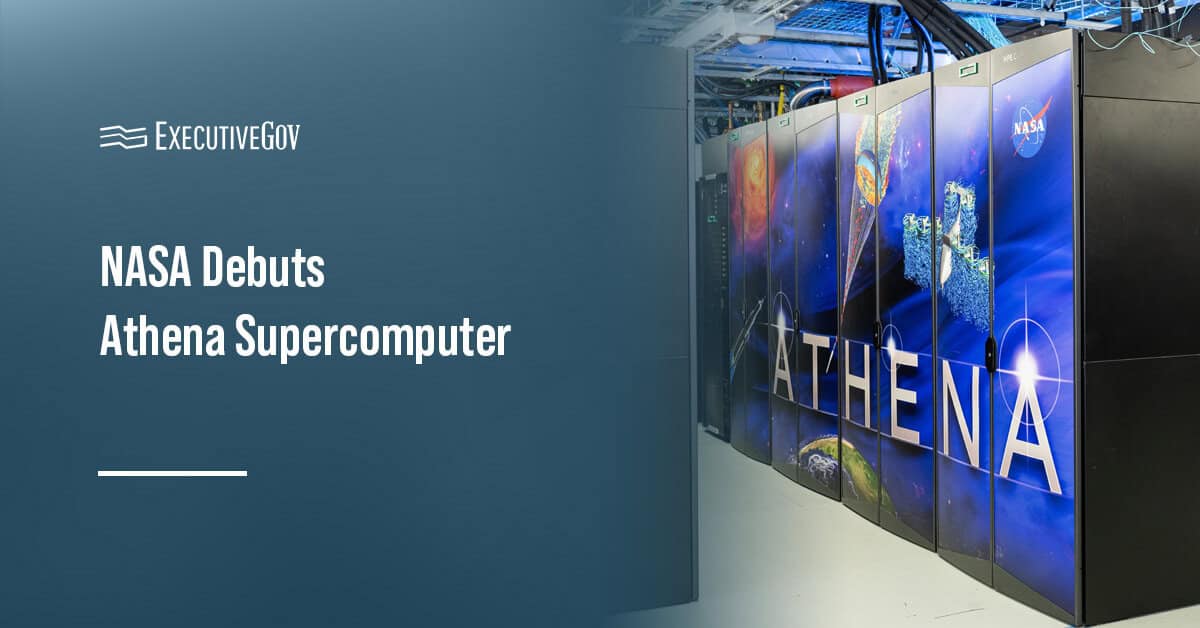
Rocket launch. NASA launched the Athena supercomputer to support mission modeling, AI and science research.

NASA has brought online Athena, a new supercomputer designed to expand the agency’s high-end computing resources for mission-critical research across space exploration, aeronautics and scientific discovery.

The space agency said Tuesday that the system, now available to users following a beta testing period, has more computing power than other NASA supercomputers. Athena also offers improvements in energy efficiency, lowering operational costs.

Table of Contents

  • What Is Athena Designed to Support?
  • Where Is NASA’s New Supercomputer Located?
  • Who Can Access the Athena System?
  • Why Was the Supercomputer Named Athena?

What Is Athena Designed to Support?

NASA said Athena will help scientists and engineers address complex challenges by enabling advanced simulations, large-scale data analysis and artificial intelligence model development.

Supercomputing systems are used across the agency to support efforts such as rocket launch modeling and next-generation aircraft design.

“Exploration has always driven NASA to the edge of what’s computationally possible,” said Kevin Murphy, chief science data officer and lead for NASA’s High-End Computing Capability portfolio. 

“Now with Athena, NASA will expand its efforts to provide tailored computing resources that meet the evolving needs of its missions,” Murphy continued.

Where Is NASA’s New Supercomputer Located?

Athena is housed at NASA’s Modular Supercomputing Facility within the agency’s Ames Research Center in California’s Silicon Valley.

NASA said the system surpasses earlier platforms such as Aitken and Pleiades in both computing capacity and efficiency, delivering more than 20 petaflops of peak performance.

Who Can Access the Athena System?

The agency said Athena is available not only to NASA researchers but also to external scientists and engineers supporting NASA programs. They may apply for computing time through the agency’s high-end computing allocation process.

Athena operates under NASA’s High-End Computing Capability, or HECC, portfolio, managed by the Office of the Chief Science Data Officer.

Why Was the Supercomputer Named Athena?

The name was selected in an internal contest among the HECC workforce in 2025.

NASA said the system was named after the Greek goddess of wisdom and warfare, noting her connection as the half-sister of Artemis, the agency’s lunar exploration program.

As NASA continues to invest in advanced computing infrastructure, the agency said systems like Athena will play a central role in supporting increasingly complex missions and accelerating the next era of discovery.

Federal Civilian/News
FAA Unveils Major Reorganization to Centralize Safety Oversight, Support Airspace Modernization
by Kristen Smith
Published on January 28, 2026
FAA logo. FAA is restructuring its organization to centralize safety oversight.

The Federal Aviation Administration is implementing a sweeping internal restructuring designed to strengthen safety oversight, accelerate modernization of U.S. air traffic systems and improve coordination across emerging aviation technologies.

Transportation Secretary Sean Duffy and FAA Administrator Bryan Bedford announced the overhaul, which represents the largest organizational change in the agency’s history and is intended to eliminate fragmented safety management practices while positioning the FAA to meet future airspace demands, the Department of Transportation said Monday.

Table of Contents

  • What Changes Are Included in the FAA Restructuring?
  • What New FAA Offices Will Focus on Modernization and Advanced Aviation?
  • What New Offices Will Focus on Modernization and Advanced Aviation?
  • What Offices Will Make Up the Updated FAA Framework?
  • What Prompted the FAA Changes?

What Changes Are Included in the FAA Restructuring?

A central element of the reorganization is the establishment of a new safety oversight office that will implement a unified safety management system and risk management strategy. According to DOT, the change will allow safety data and metrics to be shared more easily, replacing a structure in which such data were managed separately across multiple offices.

The new oversight office is backed by Congress through the 2024 FAA Reauthorization.

What New FAA Offices Will Focus on Modernization and Advanced Aviation?

The restructuring also creates a dedicated airspace modernization office tasked with advancing the development and installation of a new air traffic control system.

In addition, the FAA is standing up an advanced aviation technologies office that will oversee the integration of drones, electric vertical takeoff and landing aircraft, and other advanced air mobility systems into the national airspace.

What New Offices Will Focus on Modernization and Advanced Aviation?

Other adjustments include transitioning key leadership roles into permanent positions and consolidating finance, information technology and human resources management under the FAA administrator.

“It’s important that we have the right people in the right places to do the best work possible,” said FAA Administrator Bryan Bedford. “These actions will put permanent leaders in place who embrace innovation, share safety data and insights freely and are focused on deploying a brand-new air traffic control system all while integrating key innovation technologies into the new National Airspace System.”

According to Duffy, the overhaul will enable the FAA to “streamline the bureaucracy, encourage innovation, and deliver a new air traffic control system at the speed of Trump – all while enhancing safety,” Duffy said. “Thanks to President Trump and Republicans in Congress, we received an unprecedented $12.5 billion down payment to modernize our skies,” he added.

What Offices Will Make Up the Updated FAA Framework?

The FAA’s revised structure also includes organizations dedicated to:

  • Administration and finance
  • Policy and legal functions
  • Air traffic
  • Commercial space transportation
  • Security and intelligence

The reorganization supports Flight Plan 2026, the agency’s strategic framework focused on safety, modernization and workforce investment.

What Prompted the FAA Changes?

The FAA underwent increased scrutiny in 2025 due to a series of crashes last year resulting in several fatalities, including incidents in the airspaces and airports of Washington, D.C., Alaska, Arizona and Philadelphia, among others.

Previous 1 … 29 30 31 32 33 … 2,703 Next
News Briefing
I'm Interested In:
Wash100 Vote Now
Recent Posts
  • Farhan Khan Named FCC CIO
  • Marine Corps Advances AI-Driven Battle Management in Dynamis Serial 005 Exercise
  • Former DHS Executive Craig Basham Appointed US Secret Service Deputy CIO
  • DOE Invests $320M in Quantum, Nuclear, Material Science Research
About

ExecutiveGov, published by Executive Mosaic, is a site dedicated to the news and headlines in the federal government. ExecutiveGov serves as a news source for the hot topics and issues facing federal government departments and agencies such as Gov 2.0, cybersecurity policy, health IT, green IT and national security. We also aim to spotlight various federal government employees and interview key government executives whose impact resonates beyond their agency.

Read More >>

RSS ExecutiveBiz
  • FedTec, AiStrike Introduce FedRAMP-Ready Platform for AI-Driven Security Operations
  • Booz Allen to Support Air Force’s AEDC Hypersonic Test Improvement Project Under $82M Contract
  • Hanwha Defense USA, Hanwha Philly Shipyard Partner With VARD on Navy NGLS Contract
  • Evolver Secures CMMC Level 2 Certification to Strengthen Federal Cyber Posture
  • Amentum Relocates Hawaii Office to Boost USINDOPACOM Mission Support
  • Radiance Technologies Appoints Paul Lithgow as Chief Growth Officer
RSS GovConWire
  • Navy Selects Nine Contractors for $1.2B Training System Contract Modifications
  • RTX BBN Books $125M USTRANSCOM Modeling, Simulation Support IDIQ
  • Leidos Closes $2.4B ENTRUST Acquisition, Doubles Energy Infrastructure Market Footprint
  • Former Lockheed Martin Exec Jeff Schrader Joins Sierra Space as Chief Strategy Officer
  • NIH Issues RFP for Potential $3B Contract for Scientific, Technical Support Services
  • CyberArk’s Rahul Dubey on Treating AI Agents as Privileged Identities
Executive Gov

Copyright © 2025
Executive Mosaic
All Rights Reserved

  • Executive Mosaic
  • GovCon Wire
  • ExecutiveBiz
  • GovCon Exec Magazine
  • POC
  • Home
  • Acquisition & Procurement
  • Agencies
    • DoD
    • Intelligence
    • DHS
    • Civilian
    • Space
  • Cybersecurity
  • Technology
  • Executives
    • Profiles
    • Announcements
    • Awards
  • News
  • Articles
  • About
  • Wash100
  • Contact Us
    • Advertising
    • Submit your news
    • Jobs
Go toTop