Processing....

Executive Gov

Digital News Coverage of Government Contracting and Federal Policy Landscape
Sticky Logo
  • Home
  • Acquisition & Procurement
  • Agencies
    • DoD
    • Intelligence
    • DHS
    • Civilian
    • Space
  • Cybersecurity
  • Technology
  • Executives
    • Profiles
    • Announcements
    • Awards
  • News
  • Articles
  • About
  • Wash100
  • Contact Us
    • Advertising
    • Submit your news
    • Jobs
Logo
Artificial Intelligence/DoD/Government Technology/News
Top 5 AI Leaders in US Government & Military in 2025
by Charles Lyons-Burt
Published on June 17, 2025
Leaders from the DOD, CIA, Anthropic, OpenAI and more are the top AI innovators in 2025.

Over two and a half years on from ChatGPT’s explosive market entrance, artificial intelligence remains a major force in the public and private sector technology worlds. Of course, AI has been around in one form or another for decades, since at least the 1960s, but its recent surge marks one of the most significant tech developments in a long while.

AI is especially hot in the military right now. Just this week, OpenAI (the organization behind the aforementioned chatbot) was awarded an other transaction agreement, or OTA, by the Department of Defense that could total $200 million over just one year of required work. This comes on the heels of four technology officials — two of which are currently or were formerly affiliated with OpenAI — being appointed reserve Army lieutenant colonels as part of its new Executive Innovation Corps.

We have a feeling AI will continue to stay at the forefront of conversations about how to make the government more effective and the military more lethal in the future. Let’s investigate the individuals leading the charge in this march forward.

At the Potomac Officers Club’s 2025 Navy Summit on August 26, join the conversation about how AI can enable jaw-dropping military applications and programs. There will be a panel discussion on how generative AI is being used to enhance decision-making. Register now for this exciting conference of GovCon networking and candid military talks!
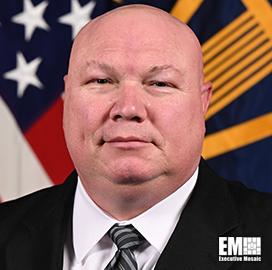
Top 5 AI Leaders in US Government & Military in 2025

Table of Contents

  • 1. Douglas Matty
  • 2. Elizabeth Kelly
  • 3. David Sacks
  • 4. Kevin Weil
  • 5. Lakshmi Raman

1. Douglas Matty

Role: U.S. Department of Defense chief digital and AI officer

Douglas Matty heads the Pentagon’s digital and AI strategies, bringing decades of military and technical expertise to one of the most impactful roles shaping defense capabilities. He previously founded the Army AI Integration Center and has held key roles in systems analysis, cybersecurity and operational logistics across a career spanning over 30 years. At CDAO, Matty leads initiatives focused on accelerating AI-driven efficiencies in military operations, including data analytics, machine learning and computer vision.

Notable achievements:

  • Spearheaded the development of the Army AI Integration Center under Army Futures Command.
  • Developed AI capabilities to enhance decision-making for U.S. forces in Iraq.
  • Introduced innovative defense-focused AI solutions, enabling better scalability of advanced technologies.

Top 5 AI Leaders in US Government & Military in 2025

2. Elizabeth Kelly

Role: Former director of the U.S. AI Safety Institute, now head of the beneficial deployments team at Anthropic

Elizabeth Kelly’s contributions to AI governance and ethics have been pivotal. During her tenure at the AI Safety Institute, Kelly established critical safety testing agreements with industry leaders OpenAI and Anthropic. Her expertise now guides Anthropic’s beneficial deployments team, which ensures equitable AI adoption in fields such as healthcare and education, particularly among resource-constrained organizations.

Notable achievements:

  • Played a key role in standardizing AI safety testing processes in federal policies.
  • Championed initiatives that provide free AI tools to nonprofit and scientific research organizations.
  • Now enables practical integration of ethical AI frameworks for mission-aligned developments.

Top 5 AI Leaders in US Government & Military in 2025

3. David Sacks

Role: White House AI and crypto czar

David Sacks serves as a critical bridge between Silicon Valley’s private sector innovation and Washington’s public policy. He leads efforts to ensure the United States maintains a competitive edge in the global AI arms race, particularly against China. Advocating for innovation-friendly policies, Sacks emphasizes reducing regulatory burdens on AI developers to foster U.S.-led advancements in global AI adoption and market standards.

Notable achievements:

  • Successfully rolled back restrictive AI executive policies, aligning government strategy with private-sector growth.
  • Advocated for technology diffusion strategies to ensure U.S.-based AI dominance in global markets.
  • Played a central role in supporting venture-backed AI startups critical to federal innovation initiatives.
  • Won Wash100 Award in 2025 for his projected role in and impacts on the government contracting industry/
Top 5 AI Leaders in US Government & Military in 2025

4. Kevin Weil

Role: Chief product officer, OpenAI

Kevin Weil applies decades of consumer tech expertise to his leadership at OpenAI, focusing on developing agentic AI technologies. He is driving transformations that extend AI capabilities from answering user inquiries to executing complex, real-world tasks autonomously. Weil strategically integrates cutting-edge AI features into consumer and enterprise solutions, offering pivotal insights into how AI will reshape workflows across industries. And in just the last week, he became a part-time senior advisor at the U.S. Army as a reserve lieutenant colonel alongside leaders from Palantir and Meta.

Notable achievements:

  • Leading the roll-out of ChatGPT’s agentic functions, enabling real-world task automation.
  • Advocates for the rapid iteration of AI models, enhancing deployment timelines for new functionalities.
  • Combines private and public sector expertise to address AI commoditization while maintaining innovation.
  • Member of Army’s Executive Innovation Corps
CIA Artificial Intelligence Chief Lakshmi Raman Talks Leveraging Tech to Develop Human Analysts’ Skills

5. Lakshmi Raman

Role: Chief artificial intelligence officer at CIA

Lakshmi Raman is redefining how the CIA integrates artificial intelligence into its operational and administrative frameworks. She champions AI agents as a means to further enterprise automation while emphasizing the importance of human oversight within AI systems to mitigate risks. Under her initiative, the CIA established its first AI governance council to codify ethical and security standards for emerging technologies.

Notable Achievements:

  • Introduced AI-based models-as-a-service platforms to improve interdisciplinary collaboration.
  • Focused on workforce transformation by bridging AI advancements with human intelligence.
  • Spearheaded cataloging and shared service platforms for AI models, enhancing accessibility and resource allocation across intelligence communities.

These leaders exemplify the strategies, foresight and expertise required to harness the full potential of AI for public service, defense and global leadership. Their contributions underscore how innovation-driven governance can redefine not just national frameworks but also the international conversation on artificial intelligence.

Are you subscribed to the ExecutiveGov daily newsletter? Released every weekday at 5 p.m. EST, we call this essential blast of need-to-know government news “GovCon Daily.” Visit our homepage to sign up!
DoD/News
DARPA Unveils OASIC Program to Accelerate Quantum Tech Development
by Miles Jamison
Published on June 17, 2025
DARPA's Optical-Atomic System Integration and Calibration program—aka OASIC—aims to boost quantum technology development.

The Defense Advanced Research Projects Agency has launched the Optical-Atomic System Integration and Calibration, or OASIC, program to accelerate the development and deployment of miniaturized quantum technologies.

The agency said Friday three teams were selected during the first phase of the Small Business Technology Transfer, or STTR, program to develop the technical and commercial plans for the OASIC initiative. The QuEra, Harvard University, MIT and University of Montana team will oversee the qubits testbed, while the Rydberg Technologies, University of Michigan and Purdue University team will handle the quantum sensors testbed. The atomic clock testbed will be developed by a team composed of Vector Atomic and the University of Colorado.

Table of Contents

  • Addressing the Lack of Quantum Research Testing Facilities
  • Setting the Standards for Optical-Atomic Components
  • Enhancements to Testing Facilities

Addressing the Lack of Quantum Research Testing Facilities

The STTR initiative facilitates the creation of advanced quantum testing centers where startups and small businesses can rapidly test and prototype their chip-scale quantum innovations. These quantum testbeds will address the lack of quantum research facilities that offer testing and evaluation services. The planned facilities will be similar to quantum university-affiliated research centers, or UARCs, which conduct tests for a fee paid through streamlined payment processes.

Setting the Standards for Optical-Atomic Components

Mukund Vengalattore, OASIC program manager at DARPA, said the main objective is to establish OASIC certification as the definitive benchmark for nanophotonic, optoelectronic and electronic components, similar to how the National Institute of Standards and Technology is the standard for technology performance, security and safety.

Enhancements to Testing Facilities

OASIC testing facilities will have a modular design to reconfigure the setup quickly and enable rapid testing and evaluation of various components. In addition, the program aims to cultivate an ecosystem where users with varying expertise collaborate to identify and address each other’s specific needs, which could fast-track the development of quantum technology.

Civilian/Government Technology/News/Space
NASA Issues RFI for Commercial Space Communication Capabilities
by Kristen Smith
Published on June 17, 2025
NASA is requesting info to try and replace the declining Tracking and Data Relay Satellite system.

NASA is requesting information from domestic and international companies about Earth proximity relay communication and navigation capabilities that could replace the aging Tracking and Data Relay Satellite system in providing near-Earth communications for future space exploration missions.

The request for information was issued as part of the Communications Services Project, which aims to assess and determine the commercial satellite communications services and technologies that can support emerging agency science missions, NASA said Monday, noting that the TDRS is retiring and will only support existing missions.

According to Kevin Coggins, deputy associate administrator of NASA’s Space Communications and Navigation Program, embracing commercial offerings could help solve communication challenges for future missions and provide a greater ability to command spacecraft, resolve issues in-flight, and deliver more data and scientific discoveries collected across the solar system.

The space agency will accept RFI responses until July 11.

What Is TDRS?

The Tracking and Data Relay Satellite system consists of seven geosynchronous satellites that relay signals between orbiting spacecraft and ground control stations. It provides near-continuous information relay services to over 25 missions, including the Hubble Space Telescope and the International Space Station. Such missions will continue to rely on TDRS until the mid-2030s.

Each TDRS spacecraft’s retirement will be driven by individual health factors, as the seven active satellites are expected to decline at variable rates. The satellite system, which began operations in 1988, consists of three generations of satellites launched over 40 years. TDRS-13, the last in the third generation, was launched Aug. 18, 2017.  

Acquisition & Procurement/DoD/News
Army Issues Draft RFP for Next Generation Transponder-II Contract
by Miles Jamison
Published on June 17, 2025
The Army's new Next Generation Transponder-II contract aims to enhance global logistics. A draft RFP has been released.

The Department of the Army has issued a draft request for proposal for the Next Generation Transponder-II contract.

NGT-II Draft RFP

According to the notice posted on SAM.gov Monday, the Army seeks potential contractors to provide advanced cellular, satellite and hybrid tracking technologies, as well as comprehensive global logistics support services, for the Department of Defense, U.S. Coast Guard, North Atlantic Treaty Organization and other federal agencies.

Army Issues Draft RFP for Next Generation Transponder-II Contract

Listen to Army officials, government leaders and industry trailblazers discussing the Army’s latest projects and initiatives. Register now and join the Potomac Officers Club’s 2025 Army Summit tomorrow, June 18!

The NGT-II program aims to enhance global logistics support and coordination by standardizing government user systems to ensure interoperability and adaptability, facilitating joint operations with allied partners. The planned project is also intended to meet the requirements of foreign military sales partners.

The NGT-II may be leveraged for radio frequency identification, government asset management, inventory and warehousing, military transportation monitoring and handling of food, medical supplies and hazardous materials.

The Army could award six firm-fixed-price, indefinite-delivery/indefinite-quantity contracts. The project will have a five-year base period with five one-year ordering periods.

News/Space
FCC to Modernize Satellite Licensing to Prioritize National Security
by Miles Jamison
Published on June 17, 2025
The FCC is working to overhaul space system regulations by reimagining and evolving satellite licensing.

The Federal Communications Commission has announced plans to modernize satellite licensing in response to the emergence of national security, particularly space defense, as a primary driver in regulating space systems.

Jay Schwarz, chief of the space bureau, said during the SAE Media Group’s Milsatcom USA conference that the agency is shifting its focus in space systems regulation by emphasizing national security while still encouraging commercial innovation, the FCC said Monday.

Table of Contents

  • Expediting Dual-Purpose Satellite Deployment
  • FCC’s Planned Reforms

Expediting Dual-Purpose Satellite Deployment

The FCC executive noted that the satellites of most companies seeking licensing from the space bureau usually have a dual purpose, serving both commercial and national security interests.

The agency plans to adopt reforms to streamline licensing and expand spectrum access to meet the challenges of global satellite competition. The FCC will modernize the licensing process to fast-track the deployment of satellites instrumental in strengthening national defense.

FCC’s Planned Reforms

The FCC has already noted a 35 percent decrease in licensing backlog since January after the shift to the new approach. The agency also aims to prioritize streamlining regulation processes for non-geostationary satellite systems, which includes revisiting the “power limit” rules. Another possible change involves opening around 20,000 megahertz of new spectrum across several underutilized bands.

“We know how urgent it is for all of our warfighters to have secure, reliable communications for an increasingly contested space domain,” said Schwarz. “So I care about the economic benefits, but I also care deeply that America’s service members are equipped with what they need,” he added.

Digital Modernization/DoD/News
DLA Launches Initiative to Automate Technical Data Management
by Kristen Smith
Published on June 17, 2025
Automation is not new at Defense Logistics Agency but it has now launched the Technical Data Management Transformation effort

The Defense Logistics Agency has launched the Technical Data Management Transformation, or TDMT, a new initiative aimed at enhancing operational efficiency.

At the DLA Supply Chain Alliance Symposium and Exhibition, Kenneth Watson, the agency’s acting commander for land and maritime, said DLA’s previous system relied on “slow and outdated” data package exchange, which led to lengthy back-and-forths. 

“But there’s a smarter way to do business, and we’re doing that right now,” he added. 

DLA Modernizing Technical Data Management

The initiative will see DLA adopt an automated technical data management system. 

Automation is not new to the agency. Over 90 percent of contract actions are now fully automated at the DLA. According to Watson, automation has also been introduced into much of the agency’s supply chain, except for technical data. 

DLA has already started piloting a program that can automate the technical data “kill chain.” The program automatically integrates the latest technical data generated from product lifecycle management systems into a central, digital repository.

“Having that tech data accurate, ready and being passed digitally back and forth is absolutely essential to how we’re going to do business,” the official explained. “That in a nutshell is what the [technical data management transformation] is all about.”

Watson added that the first phase of the modernization initiative will connect TDMT with DLA’s enterprise business systems. The feature will go live in November.

Cybersecurity/News
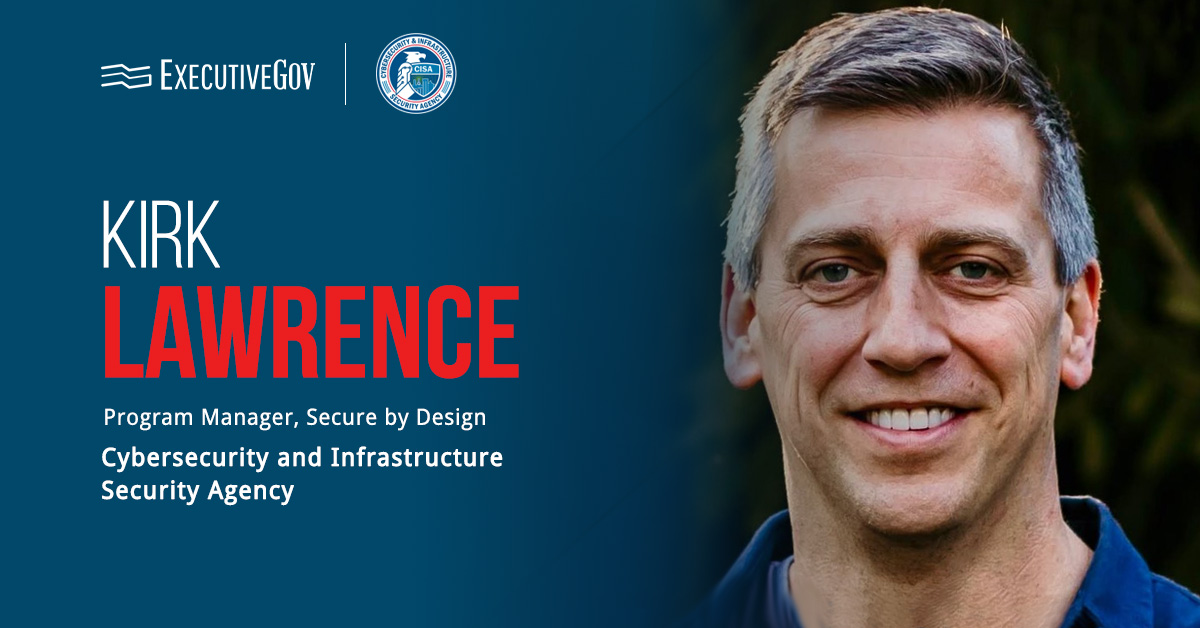
CISA’s Kirk Lawrence on Secure by Design Framework
by Jane Edwards
Published on June 16, 2025
Secure by Design principles are the first step toward a threat-resilient digital ecosystem, according to CISA's Kirk Lawrence

Kirk Lawrence, program manager for the Secure by Design initiative at the Cybersecurity and Infrastructure Security Agency, said implementing Secure by Design principles is the first step in building a threat-resilient digital environment, Nextgov/FCW reported Friday.

“It doesn’t mean that your place can’t get broken into, that someone can’t come steal your stuff, but they [have] to work a little harder now to have a different set of skills,” Lawrence said. “Secure by Design is not the end of risk. It’s the start of resilience.”

Table of Contents

  • Gaining Executive Buy-In for Secure by Design
  • CISA’s Secure by Design Initiatives

Gaining Executive Buy-In for Secure by Design

The CISA official also cited the agency’s effort to highlight Secure by Design’s business benefits. He said the key mission is to develop talking points for a tech project owner to discuss the value of Secure by Design with C-level executives to gain the latter’s support.

“One of the key principles that we’ve advocated since the beginning is that it’s not going to happen unless you have executive buy-in, which is one of the very first steps to having effective Secure by Design,” Lawrence said at a cybersecurity conference.

CISA’s Secure by Design Initiatives

In May 2024, CISA and its counterparts in Australia, New Zealand, Canada and the U.K. issued guidance on Secure by Design considerations that manufacturers and organizations could use to inform their decisions when purchasing digital products and services. 

CISA also announced last year that 68 software manufacturers and technology firms participated in the agency’s Secure by Design pledge.

In August 2024, CISA and the FBI released a guide to help customers ensure that the Secure by Design concept is a core consideration in software procurement.

DoD/News/Space
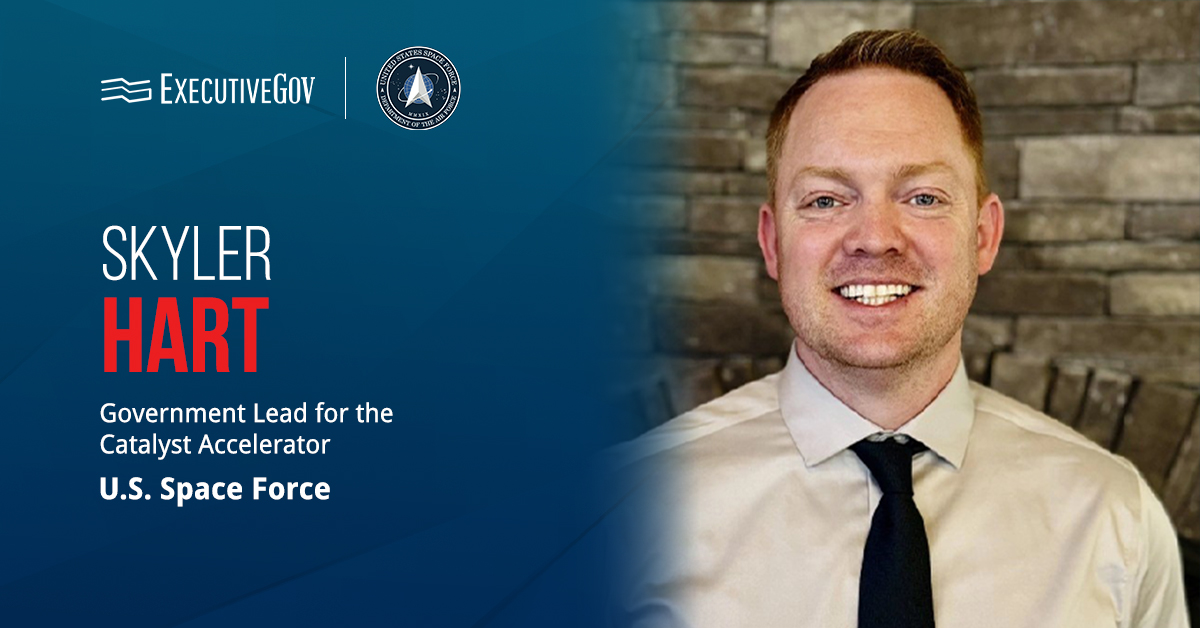
Catalyst Accelerator Seeks Startups With Directed Energy, EW Tech for Fall 2025 Cohort
by Jane Edwards
Published on June 16, 2025
The Fall 2025 Cohort from the Catalyst Accelerator enterprise is seeking directed energy and electronic warfare technology.

The Catalyst Accelerator has started soliciting applications from U.S. small businesses and startups with dual-use directed energy and electromagnetic warfare technologies for the Fall 2025 Cohort.

The accelerator said Friday it is seeking EW and DE technologies that could disrupt, deny or destroy adversary assets across all domains.

The Catalyst Accelerator is backed by the Air Force Research Laboratory’s Space Vehicles Directorate and the U.S. Space Force. It is a collaborative program hosted by the Catalyst Campus for Technology and Innovation in Colorado Springs, Colorado.

Catalyst Accelerator Seeks Startups With Directed Energy, EW Tech for Fall 2025 Cohort

Learn more about the latest defense tech capabilities and trends at the 2025 Air and Space Summit on July 31. Save your spot now for this Potomac Officers Club-hosted event.

“I’m excited to kick off our next cohort in the fall that revolves around Electromagnetic (EW) and Directed Energy warfare (DEW). These technologies are proving to be instrumental in combating drone warfare in Ukraine, but they also have applicability in space warfare and counter space operations,” said Capt. Skyler Hart, government lead for the Catalyst Accelerator at the Space Force.

“As we look to the future, we need to find innovative ways to disrupt, neutralize or even destroy an adversary’s ability to execute their kill chain. EW and DEW effects are powerful tools to achieve this objective. I look forward to seeing what technologies that the small businesses bring forward to address this critical need,” Hart added.

Table of Contents

  • Catalyst’s Fall Cohort Topics of Interest
  • Directed Energy & Electromagnetic Warfare Accelerator

Catalyst’s Fall Cohort Topics of Interest

The topics of interest for the Fall 2025 Cohort are artificial intelligence and machine learning implementation and integration; battle management; laser weapon systems; and emerging and novel technologies.

For AI and machine learning, the accelerator is interested in adaptive and predictive EW systems that autonomously adjust jamming techniques; cognitive electronic support; and real-time spectrum analysis and threat identification for radio frequency spectrum.

Directed Energy & Electromagnetic Warfare Accelerator

The Catalyst Accelerator will host a virtual “Ask Me Anything” session on June 18 and accept applications through July 8. 

The accelerator will select six to eight companies to participate in the Fall 2025 Cohort, enabling them to connect with government and industry to promote their DE and EW technologies and secure government contracts.

The Space Security Defense Program will serve as the official problem sponsor for the Fall 2025 Cohort, which will begin on Aug. 19 and conclude with a Demo Day event on Nov. 20.

DoD/Government Technology/News
Army Unveils Executive Innovation Corps, Taps Private Sector Tech Leaders as Advisers
by Miles Jamison
Published on June 16, 2025
Four leading tech executives from companies like Meta and OpenAI were officially accepted into the Army as Reserve Lt. Cols.

The U.S. Army has launched a new program aimed at integrating private sector technological leadership into the Army to merge commercial and military technologies.

Table of Contents

  • New Tech-Focused Army Initiative 
  • Bridging Private Sector Expertise With Defense Needs

New Tech-Focused Army Initiative 

According to the Army, four prominent technology executives were officially accepted into the service on June 13 under the Detachment 201: The Army’s Executive Innovation Corps initiative. These tech professionals will join the Army Reserve as part-time senior advisers without having to leave their current industry roles.

Army Unveils Executive Innovation Corps, Taps Private Sector Tech Leaders as Advisers

Get the inside track on the U.S. Army’s latest modernization programs, like the new Detachment 201 initiative. Listen to Army officials, government leaders and industry trailblazers as they discuss the service branch’s most urgent priorities and challenges. Register now and join the Potomac Officers Club’s 2025 Army Summit on June 18.

The first four members of the Executive Innovation Corps and new Army Reserve Lt. Cols. are:

  • Shyam Sankar, chief technology officer of Palantir
  • Andrew Bosworth, CTO of Meta
  • Kevin Weil, chief product officer of OpenAI
  • Bob McGrew, adviser at Thinking Machines Lab and former OpenAI chief research officer

Bridging Private Sector Expertise With Defense Needs

The tech leaders will provide expert insights to accelerate and scale advanced technologies for various defense capabilities and other applications. They will leverage years of experience in the private sector to guide Det. 201 in its efforts to bolster military innovation, including the Army Transformation Initiative, which is meant to transform the service into a leaner, smarter and more lethal force.

DoD/News
GAO Says DOD’s $10.9B Tech Programs Not Tracking Performance Metrics
by Kristen Smith
Published on June 16, 2025
In a new assessment, GAO found that the Department of Defense didn't report performance measures on its IT business programs.

The Department of Defense did not report required performance measures on IT business programs assessed in a new Government Accountability Office report. 

The report, published Thursday, recommends that the Pentagon identify and report the minimum number of performance metrics on IT business programs as part of its submission to the Federal IT Dashboard, which tracks IT investments across the government. 

GAO Reviews DOD’s Tech Programs

According to the Federal IT Dashboard, DOD has spent or plans to spend $10.9 billion on 24 major IT business programs from fiscal 2023 through 2025. About 43 percent of the budget is allocated to four programs: DOD Healthcare Management System Modernization, Enterprise Resource Planning, Enterprise Business System and Joint Operational Medicine Information Systems. 

GAO noted that not all programs reported performance in the required categories. IT programs with operational investments specifically have to keep track of a minimum of five performance metrics in the categories of customer satisfaction, strategic and business results, financial, and innovation. Of the 19 IT programs with operational investments, only 14 submitted the minimum required number of performance metrics in each category. 

The congressional watchdog also found that 11 programs are using Agile and iterative software development approaches and services. Of the 11 programs, three did not use metrics and management tools required by DOD and recommended under GAO’s Agile Assessment Guide.

Moreover, two programs do not have approved cybersecurity strategy and four have yet to develop plans to implement zero trust architecture by 2027.

DOD has concurred with the results of GAO’s review and provided steps it is taking to address the aforementioned issues.

Previous 1 … 153 154 155 156 157 … 2,720 Next
News Briefing
I'm Interested In:
Recent Posts
  • Joseph Tonon Named DCSA Director
  • Chris Scolese on AI’s Role in NRO’s Space-Based Intel Capability Delivery
  • What You Need to Know About the Growing Iranian Cyberthreat
  • FDA Launches Elsa 4.0, Consolidates Data Systems Into New HALO Platform
About

ExecutiveGov, published by Executive Mosaic, is a site dedicated to the news and headlines in the federal government. ExecutiveGov serves as a news source for the hot topics and issues facing federal government departments and agencies such as Gov 2.0, cybersecurity policy, health IT, green IT and national security. We also aim to spotlight various federal government employees and interview key government executives whose impact resonates beyond their agency.

Read More >>

RSS ExecutiveBiz
  • Arcfield Subsidiary STC Lands Subcontract for DOW Maritime Program
  • Lockheed Martin, Seagate Space, Firefly Partner to Advance Sea-Based Launch Capability
  • Former NASA Administrator Jim Bridenstine Takes CEO Role at Quantum Space
  • Carahsoft to Serve as Public Sector Distributor of Willow’s Operational AI
  • Army Awards Eight Spots on NCODE Cybersecurity Support Contract
  • C Speed Secures CMMC Level 2 Certification
RSS GovConWire
  • Air Force Awards $866M NASIC Advisory Services IDIQ to 4 Companies
  • CBP CIO Sonny Bhagowalia Accepts 2026 Wash100 Award From Jim Garrettson
  • NextPoint Acquires UScontracting to Enhance Cyber, Data Analysis Services
  • Scale AI’s Pentagon CDAO Production OTA Ceiling Rises to $500M
  • Lockheed Selects OJ Sanchez to Lead Aeronautics Business Following Greg Ulmer’s Retirement
  • HII Reports $3.1B Revenue, Growth Across Shipbuilding & Mission Technologies Segments in Q1 FY26
Executive Gov

Copyright © 2025
Executive Mosaic
All Rights Reserved

  • Executive Mosaic
  • GovCon Wire
  • ExecutiveBiz
  • GovCon Exec Magazine
  • POC
  • Home
  • Acquisition & Procurement
  • Agencies
    • DoD
    • Intelligence
    • DHS
    • Civilian
    • Space
  • Cybersecurity
  • Technology
  • Executives
    • Profiles
    • Announcements
    • Awards
  • News
  • Articles
  • About
  • Wash100
  • Contact Us
    • Advertising
    • Submit your news
    • Jobs
Go toTop