Processing....

Executive Gov

Digital News Coverage of Government Contracting and Federal Policy Landscape
Sticky Logo
  • Home
  • Acquisition & Procurement
  • Agencies
    • DoD
    • Intelligence
    • DHS
    • Civilian
    • Space
  • Cybersecurity
  • Technology
  • Executives
    • Profiles
    • Announcements
    • Awards
  • News
  • Articles
  • About
  • Wash100
  • Contact Us
    • Advertising
    • Submit your news
    • Jobs
Logo
Artificial Intelligence/DoD/News
Army Launches Project ARIA to Accelerate AI Adoption
by Jane Edwards
Published on March 6, 2026
U.S. Army seal. The Army has launched Project ARIA to advance the use of AI capabilities to modernize military operations.

The Army has launched Project ARIA, or Army Rapid Implementation of Artificial Intelligence, to harness AI capabilities as part of efforts to modernize military operations, improve decision-making and reduce administrative workloads for soldiers. 

Army Launches Project ARIA to Accelerate AI Adoption

The Army’s launch of Project ARIA highlights the growing role of AI in modern military operations and decision-making. Join government and industry officials at the Potomac Officers Club’s 2026 Artificial Intelligence Summit as they discuss emerging AI strategies and technologies. Save your seat now to join the conversation on the future of AI in defense and government.

Table of Contents

  • What Is Project ARIA?
  • What Are the 3 Development Teams of Project ARIA?
  • How Does Project ARIA Fit Into the Army’s Broader AI Efforts?

What Is Project ARIA?

The service said Thursday Project ARIA is an initiative that seeks to advance collaboration with technology companies to speed up the development and delivery of AI tools to warfighters within months.

Deputy Under Secretary of the Army David Fitzgerald said the program is designed to accelerate the adoption of AI-driven platforms across the service.

“Project ARIA is about delivering real capabilities, not endless development cycles,” Fitzgerald noted. “This initiative is designed for speed and agility, ensuring we get cutting-edge technology into the hands of our Soldiers as quickly as possible.”

Army officials said the project followed an AI tabletop exercise hosted by Secretary of the Army Daniel Driscoll in September 2025, where Army leaders and AI specialists collaborated on potential solutions to operational challenges.

What Are the 3 Development Teams of Project ARIA?

Project ARIA includes three development teams focused on building AI tools for key Army mission areas: Team Gray, Team Black and Team Yellowstone.

Team Gray is developing agentic AI tools to automate the service’s planning, programming, budgeting and execution process to enable leaders to accelerate the decision-making process while allowing soldiers to focus on core missions.

Team Black is creating a “model armory” that provides AI models for operational use from centralized data centers to the tactical edge, including capabilities designed to operate in denied environments.

Team Yellowstone is applying AI to supply chain management, beginning at Anniston Army Depot in Alabama, where predictive tools will help predict maintenance requirements and ensure parts availability to reduce equipment downtime.

“Through Project ARIA, we are building the Army of tomorrow, today,” said Fitzgerald. “By working with the nation’s top minds in artificial intelligence, we are rapidly developing and deploying smart tools that empower our Soldiers, streamline our operations, and ensure our readiness for any challenge.”

How Does Project ARIA Fit Into the Army’s Broader AI Efforts?

Project ARIA aligns with several Army initiatives to expand the use of AI capabilities across the force. The service recently launched the Army Enterprise Large Language Model Workspace, a generative AI platform hosted in cArmy Cloud that provides secure access to LLMs and other AI tools for authorized users.

Army leaders are also exploring AI applications for command and control at the tactical edge through the Next Generation Command and Control initiative. In addition, the Army’s Network Enterprise Technology Command has introduced NETCOM Edge, a data science platform designed to support the development of AI and machine learning tools for network operations and cybersecurity.
Federal Civilian/News
FCC’s Brendan Carr Proposes Spectrum Availability Expansion for Next-Gen Space Operations
by Elodie Collins
Published on March 6, 2026
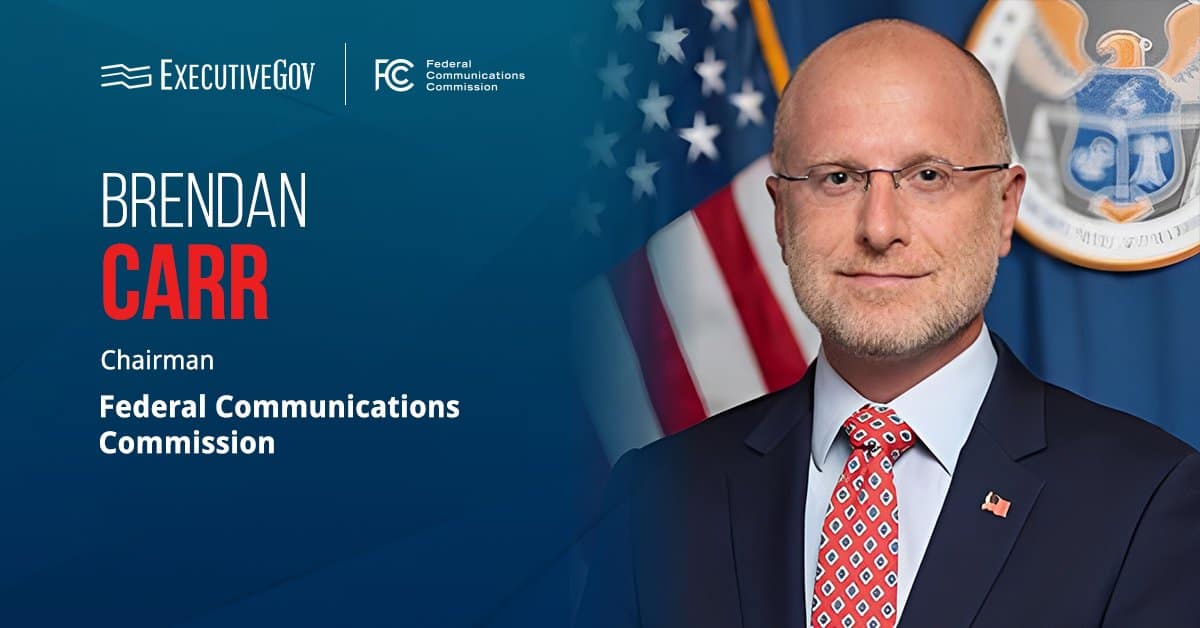
FCC Chair Brendan Carr. Carr issued a proposal to ensure reliable spectrum access for emergent space operations

Brendan Carr, chairman of the Federal Communications Commission, has proposed a plan to provide spectrum access for emerging space technologies and operations.

Carr’s proposal, issued Thursday, aims to support what the commissioner described as “weird space stuff,” or emergent space ventures, such as orbital laboratories, private inhabitable spacecraft and in-space satellite repair.

Table of Contents

  • How Will the Proposed Rule Support Next-Generation Space Operations?
  • Why Is the FCC Working to Release 20,000 Megahertz of Spectrum?

How Will the Proposed Rule Support Next-Generation Space Operations?

If adopted, the commission would start formal proceedings to explore regulatory updates and identify additional spectrum bands that could support telemetry, tracking and command functions required to operate spacecraft safely.

Telemetry, tracking and command capabilities allow operators to control spacecraft and monitor performance in orbit, making spectrum access a critical component of space operations.

“America’s leadership in space relies on predictable spectrum resources. Nowhere is this more clear than when it comes to the cutting-edge space operations that come right out of sci-fi and into our modern reality,” Carr stated.

“Whether we’re talking about repairing a satellite in orbit or creating pharmaceutical solutions to our health care challenges in a space lab, these very real ventures will require very real resources, including secure radio signals for control and basic operations. Today’s proposal is the first step toward the spectrum abundance needed to give America’s space activities the predictable spectrum environment they need to thrive,” the official added.

The effort aligns with the FCC’s broader push to achieve spectrum abundance in outer space.

Why Is the FCC Working to Release 20,000 Megahertz of Spectrum?

In May, the commission issued a notice of proposed rulemaking to seek input on unlocking more than 20,000 megahertz of spectrum to support high-speed internet delivered from space.

The initiative examines expanding satellite connectivity across several underutilized spectrum bands located near existing satellite frequencies. Freeing up the spectrum bands could help enable next-generation satellite broadband services while strengthening U.S. leadership in the global space economy, the FCC said.

Civilian/Government Technology/News
DOE Funds 10 Quantum Computing Projects Under QC3 Program
by Kristen Smith
Published on March 6, 2026
DOE logo. ARPA-E awarded $37M in funding to 10 QC3 projects.

The Department of Energy’s Advanced Research Projects Agency-Energy has selected 10 projects to receive a combined $37 million in funding under the Quantum Computing for Computational Chemistry, or QC3, program, an initiative aimed at advancing quantum algorithms for chemistry and materials science applications tied to energy technologies.

ARPA-E said Thursday the selected teams will develop quantum computing approaches that could accelerate breakthroughs in areas such as superconducting transmission lines, advanced batteries, rare-earth-free magnets, and new catalysts for fertilizer and fuel production.

Table of Contents

  • Which Projects Were Selected?
  • What Is the QC3 Program?

Which Projects Were Selected?

Among the projects selected for funding is Boeing’s Quantum Innovation for Corrosion Kinetics project, which will develop quantum computing methods to model chemical reactions that cause corrosion. The approach is expected to improve modeling speed and accuracy by up to 100 times, supporting the development of corrosion-resistant alloys for aviation, steel infrastructure and next-generation battery technologies. Boeing’s project received $2.5 million in funding.

Another selected effort is PsiQuantum’s Quantum-Enabled Direct Methane-to-Methanol project, which will leverage fault-tolerant quantum computing workflows integrating quantum chemistry simulations, classical computation and high-throughput experimentation in the design of new catalysts for direct methane conversion. The project received $3.6 million in funding.

Other projects include work by national laboratories, universities and private companies such as Lawrence Livermore National Laboratory, Infleqtion, Quantinuum, Phasecraft, California Institute of Technology and Xanadu Quantum Technologies.

“ARPA-E is working to move quantum computing out of academic journals and into applications that innovate how Americans access energy,” said ARPA-E Director Conner Prochaska. 

“QC3 is ARPA-E’s first contribution to the quantum ecosystem at the heart of the U.S. government’s mission to cultivate the next frontier of computing and convert technical advances into competitive advantages for America’s energy dominance, economy, and national security,” he added.

What Is the QC3 Program?

The QC3 initiative focuses on developing and optimizing the entire quantum computing stack, including applications, algorithms and error-correction methods. Project teams must demonstrate that their algorithms offer scalable quantum advantage over classical computing approaches and execute their work on real quantum hardware.

Acquisition & Procurement/Civilian/News
OMB Launches GSA-Led Acquisition Quality Service Management Office
by Miles Jamison
Published on March 6, 2026
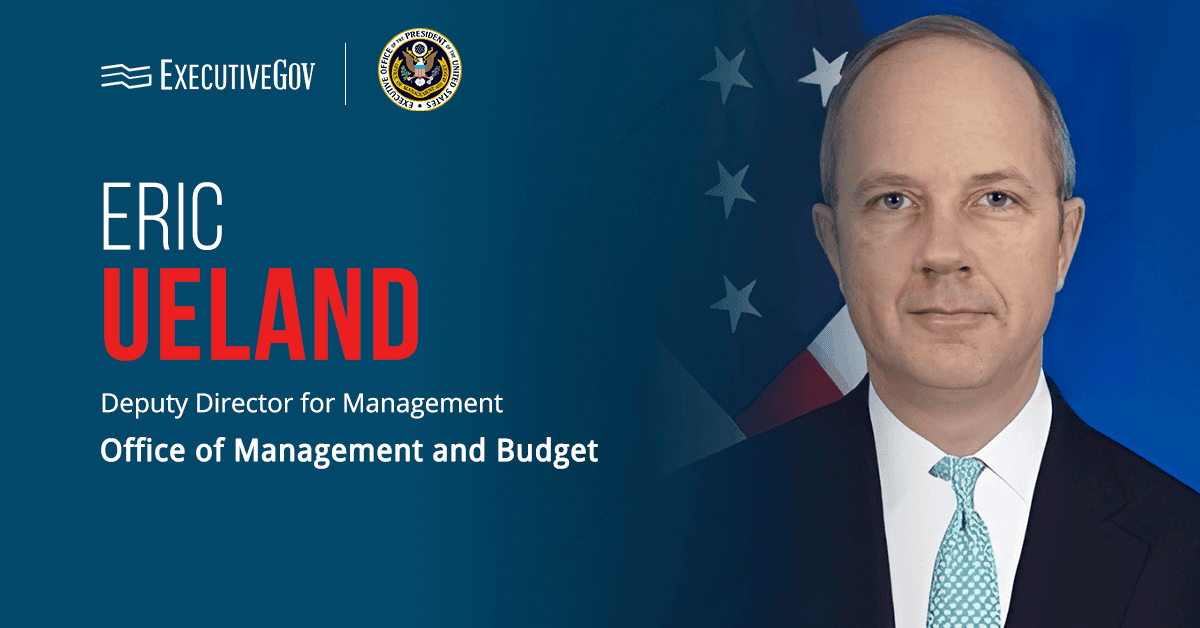
OMB Deputy Director Eric Ueland. OMB has launched the Acquisition Quality Service Management Office.

The Office of Management and Budget has launched a new acquisition-focused Quality Service Management Office, or QSMO, that will be led by the General Services Administration, Federal News Network reported Thursday.

Table of Contents

  • What Is the Acquisition QSMO?
  • What Is a QSMO?
  • Industry Partnerships Expand QSMO Capabilities

What Is the Acquisition QSMO?

OMB Deputy Director for Management Eric Ueland announced the launch during a Shared Services Leadership Coalition conference in Washington, saying the new QSMO will focus on acquisition systems across federal civilian agencies. The GSA-led Acquisition QSMO is the fifth such office to be established.

“The key aspect here, of course, is in that shared services concept, how do we take what are generously counted as nearly 230 acquisition systems across the federal government, and bring those down to a reputable and easy-to-access number to simplify what’s important and necessary for the federal government when it comes to acquisition,” Ueland said.

What Is a QSMO?

A Quality Service Management Office is a federal shared services model created in 2019 in which a designated agency manages a central hub and marketplace for a specific mission-support function across government. Under this structure, agencies can access multiple shared services through the lead organization responsible for that function.

Existing QSMOs oversee areas such as cybersecurity led by the Department of Homeland Security, grants management under the Department of Health and Human Services, human resources led by the Office of Personnel Management and financial management handled by the Treasury Department.

Industry Partnerships Expand QSMO Capabilities

QSMOs partner with technology providers and integrators to help agencies modernize mission-support systems. The Treasury Department, for example, added Guidehouse and SAP to the Financial Management QSMO in 2025. Guidehouse provides financial management and transformation services, while SAP offers enterprise software platforms, such as its S/4HANA Cloud.

Cybersecurity/News
Leidos VP Josh Salmanson on Strengthening Cyber Resilience in Contested Environments
by Jane Edwards
Published on March 5, 2026
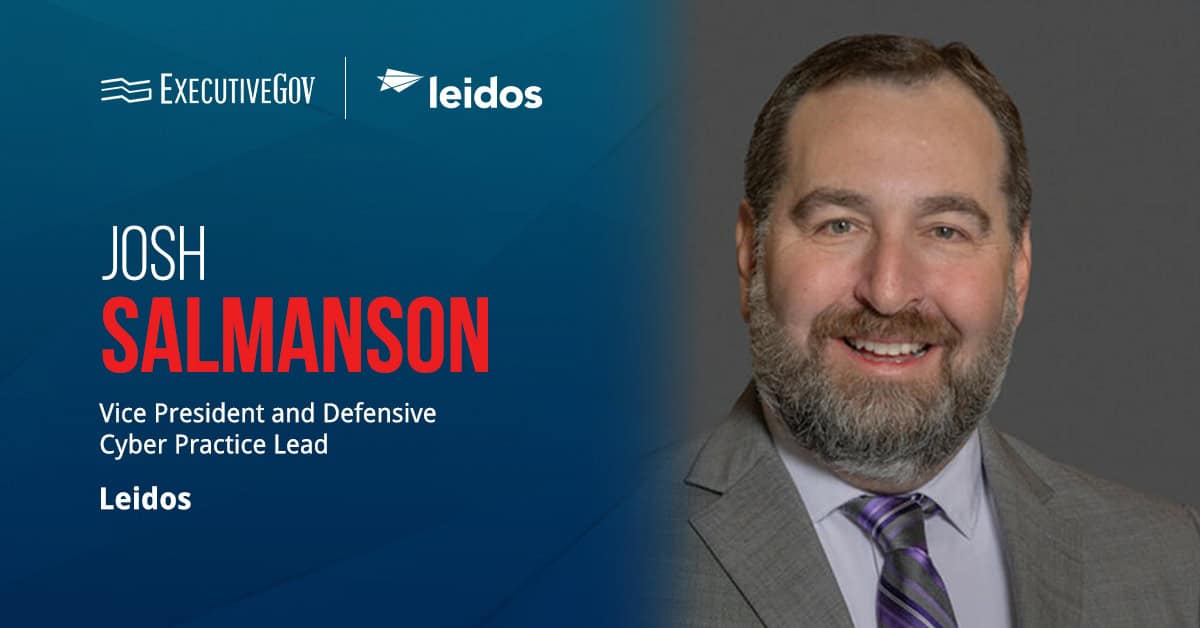
Josh Salmanson. The Leidos VP discussed how organizations can strengthen cyber resilience in contested environments.

Josh Salmanson, vice president and defensive cyber practice lead at Leidos, discussed how organizations can strengthen cyber resilience in contested and high-threat environments as federal missions increasingly depend on secure digital infrastructure.

Leidos VP Josh Salmanson on Strengthening Cyber Resilience in Contested Environments

As agencies navigate increasingly complex cyberthreats and contested digital environments, conversations about resilience and mission readiness are gaining urgency across government and industry. The 2026 Cyber Summit offers leaders an opportunity to exchange ideas with peers shaping federal cybersecurity strategies. Sign up now to join the event on May 21.

Table of Contents

  • How Should Cyber Systems Be Designed for Contested Environments?
  • Why Is Asset Visibility Critical to Cyber Defense?
  • How Can Automation & Threat Intelligence Support Resilience?
  • How Does Spectrum Awareness Improve Cyber Defense?
  • How Is Leidos Breaking Down Cyber Silos Across Enterprise Operations?

How Should Cyber Systems Be Designed for Contested Environments?

In a recent GovCon Conversation video interview with Executive Mosaic Senior Content Manager Charles Lyons-Burt, Salmanson said cyber resilience begins early in the system design process.

“Well it definitely starts in early in our design process as we’re looking at problems and coming up with creative ways to solve them,” he said.

In military terms, he explained, teams should start “as far left at boom as possible,” designing systems differently when they are expected to operate in denied or contested environments rather than commercial cloud settings.

He added that organizations often adapt existing capabilities for emerging mission needs.

“How do we take what’s working today and maybe put it into a slightly different form factor to be able to help an ally do a better job of defending themselves?” Salmanson said.

Why Is Asset Visibility Critical to Cyber Defense?

Salmanson emphasized that understanding enterprise assets and configurations remains foundational to defense.

“If you know what you have and how it’s configured and what’s happening and what’s normal on your networks and you know what’s coming that’s the threat intel piece then it’s pretty easy to defend,” he said.

He noted that some organizations struggle with incomplete visibility into their infrastructure.

“There’s a lot of organizations that have assets and they didn’t know they were theirs,” Salmanson said, adding that defending unknown assets can be particularly difficult.

How Can Automation & Threat Intelligence Support Resilience?

Salmanson said automation, cyber deception and collaborative threat intelligence play important roles in defending modern systems.

Leidos incorporates automation where possible, particularly in cloud-native environments, and uses cyber deception techniques to slow adversaries and impose costs on malicious actors.

“We fully leverage all these advanced collaborative threat intelligence tools that we can tailor for every customer’s environment,” he said.

How Does Spectrum Awareness Improve Cyber Defense?

Operating in contested environments often requires visibility into wireless and radio frequency domains.

“When you go to high threat environments, you’re often times on wireless and the hardest thing for most people to comprehend is you can’t see radio frequency spectrum,” Salmanson said.

He explained that without tools to visualize that spectrum, defenders may not know whether adversaries are already operating in their environment.

“So unless you have tools that allow you to see those spectrums, you don’t always know if you actually have adversaries in your space already or not,” Salmanson said.

He added that visualizing the environment helps organizations better understand contested spaces and defend their assets.

“So we bring the capability to visualize the environment to the table. All of that’s very helpful in helping us defend and also to look at this contested space a little differently. Not everybody looks at the spectrum as it applies to defending their other assets and we do,” he said.

How Is Leidos Breaking Down Cyber Silos Across Enterprise Operations?

Salmanson said Leidos is integrating cyber capabilities across practice areas to support digital modernization and transformation efforts.

“We established the DigMod practices … to be able to bring a secure and unified front to all of the digital modernization and transformation efforts,” he said.

He added that the company integrates cyber data with operational telemetry from other practice areas, noting that siloed operations can limit visibility across the enterprise.

Industry News/News/Wash100
2026 Wash100 Popular Vote Week 4: GovCon & Defense Leaders Battle for Positions in Tight Race
by Gabriella DeCesare
Published on March 5, 2026
2026 Wash100 Popular Vote Week 4: GovCon & Defense Leaders Battle for Positions in Tight Race

The Wash100 Popular Vote continues to energize the GovCon community, as leaders from government, military and industry compete for the top spot. With thousands of votes already cast, this year’s rankings showcase a dynamic mix of defense officials, cabinet leaders and private-sector executives whose influence is shaping the future of the federal landscape.

Make your voice heard—cast your vote today to help decide who rises on this year’s leaderboard!

Table of Contents

  • Who Is Leading the 2026 Wash100 Popular Vote?
  • Which Leaders Are Gaining Momentum Toward the Top? 
  • Who Is Competing Closely Across GovCon and Defense? 
  • How Could the Leaderboard Change Next?

Who Is Leading the 2026 Wash100 Popular Vote?

The Wash100 Popular Vote is currently led by Hung Cao, who has surged far ahead of the field with 2,184 votes. The under secretary of the Navy and once a candidate for U.S. Senate and the House of Representatives, Cao has built a commanding lead that underscores strong enthusiasm among voters for his leadership and vision.

Following behind in a tightly contested cluster are several high-profile cabinet members. Secretary of State Marco Rubio holds second place with 1,500 votes, narrowly ahead of Director of National Intelligence Tulsi Gabbard, who sits in third with 1,497 votes.

Rounding out the top five are Secretary of War Pete Hegseth, and former Homeland Security Secretary Kristi Noem, who are currently tied with 1,451 votes each. The close margin between these leaders highlights how quickly the rankings could shift as voting continues.

Which Leaders Are Gaining Momentum Toward the Top? 

Just outside the top five, Brandon Daniels, CEO of Exiger, leads the next tier with 862 votes, signaling strong support from the GovCon community. Close behind is Gen. Dan Caine, chairman of the Joint Chiefs of Staff, who has garnered 836 votes.

Other notable figures gaining traction include Kelly Loeffler of the Small Business Administration with 473 votes, followed by Tang Pham of AT&T with 400 votes.

Movement in this range is already visible. Rohit Gupta of Aretum climbed one position this week to reach 358 votes, edging ahead of Adel Al-Saleh of SES, who is finishing the week with 356 votes.

The remainder of the top 15 features prominent GovCon executives and defense leaders, including:

  • Carey Smith, chair, president and CEO of Parsons (12th place; 312 votes)
     
  • Gen. Michael Guetlein, vice chief of space operations at the U.S. Space Force (13th place; 308 votes)
     
  • Kirsten Davies, Department of War chief information security officer (14th place; 292 votes)
     
  • DeEtte Gray, president of U.S. operations at CACI (15th place; 255 votes) and last year’s Popular Vote winner!

With relatively tight margins in this group, continued voting could quickly reshape the order. Make an impact in the race—cast your vote today!

Who Is Competing Closely Across GovCon and Defense? 

The top 15 rankings highlight industry leaders’ growing momentum.

John Mengucci, president and CEO of CACI, raced into 16th, moving up four ranks in week four with 229 votes, followed closely by Stephanie Mango, president of CGI Federal, with 226 votes.

Several industry leaders have dominated the top 30. Srini Attili, CEO of SAIC, moved up in the ranking with 222 votes, overtaking John Phelan, secretary  of the Navy, with 221 votes.

Additional leaders in this competitive tier include:

  • John Heneghan, president of ECS (20th place; 212 votes)
     
  • Hon. Michael Duffey, Department of War under secretary (21st place; 190 votes)
     
  • Matt Tait, president and CEO of MANTECH (22nd place; 162 votes)
     
  • Sonny Bhagowalia, chief information officer of the Department of Homeland Security (23rd place; 156 votes)
     
  • La’Naia Jones, chief information officer of the CIA (24th place; 149 votes)

Rounding out the top 30 are senior military and national security leaders such as Lt. Gen. Michele Bredenkamp of the National Geospatial-Intelligence Agency, Daniel Driscoll of the U.S. Army, Lt. Gen. Joshua Rudd of the National Security Agency, Adm. Samuel Paparo of U.S. Indo-Pacific Command, Gen. Chance Saltzman of the U.S. Space Force. Finally, Barbara Supplee of SAIC snagged another spot for industry, closing today’s rankings with 123 votes. 

How Could the Leaderboard Change Next?

With strong participation from across the government contracting and defense communities, the 2026 Wash100 Popular Vote remains wide open. Early leaders have established momentum, but close margins across much of the leaderboard mean that the standings could shift rapidly as more votes come in.

As supporters rally behind their favorite leaders, the coming days promise plenty of movement on the leaderboard—making now the perfect time for voters to make their voices heard in one of GovCon’s most closely watched competitions.

Cast your vote in the Wash100 Popular Vote today and show your support for the leaders shaping the future of government, defense and the GovCon industry.

News/Space
NASA, OPM to Support US Space Program With NASA Force
by Jane Edwards
Published on March 5, 2026
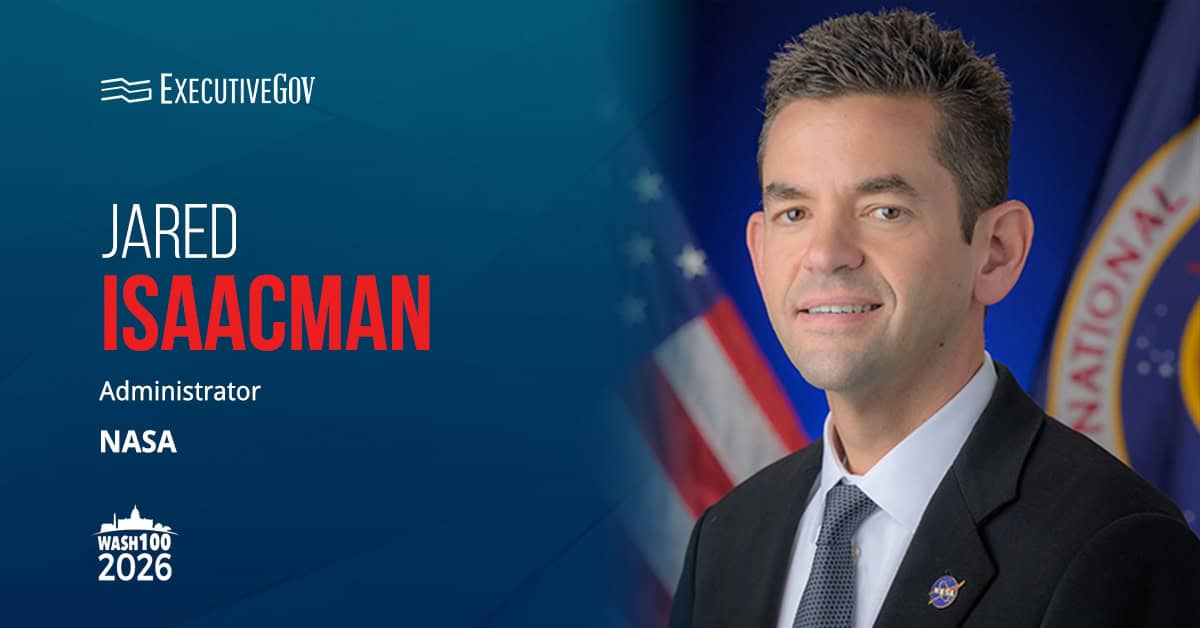
Jared Isaacman. The NASA administrator commented on NASA Force launched with OPM as part of the U.S. Tech Force initiative.

NASA and the Office of Personnel Management have launched NASA Force, a talent track within the U.S. Tech Force initiative aimed at recruiting top engineers and technologists to support the U.S. space program.

NASA, OPM to Support US Space Program With NASA Force

As initiatives like NASA Force highlight the growing focus on strengthening America’s space workforce and innovation ecosystem, leaders across government and industry continue to gather to discuss the future of the air and space domain. Save your seat now for the 2026 Air and Space Summit on July 30 and join the conversation at this premier event.

Table of Contents

  • What Is NASA Force?
  • What Did NASA & OPM Leaders Say About the Initiative?
  • What Is the US Tech Force?

What Is NASA Force?

The space agency said Wednesday NASA Force is a new initiative designed to recruit high-impact technical talent and deploy engineers, technologists and other technical professionals into mission-critical roles supporting NASA’s space exploration, aerospace research and advanced technology priorities, ensuring the agency has the expertise needed to maintain U.S. leadership in space.

What Did NASA & OPM Leaders Say About the Initiative?

NASA Administrator Jared Isaacman, a 2026 Wash100 awardee, said the program will help the agency recruit the next generation of technical innovators and experts.

“America’s leadership in space depends on extraordinary talent,” Isaacman said. “NASA Force will help us attract the next generation of innovators and technical experts who are ready to solve the toughest challenges in exploration, science, and aerospace technology. This partnership strengthens our workforce and helps ensure the United States remains the global leader in space.”

OPM Director Scott Kupor emphasized that the initiative will help ensure NASA can tap into the country’s top engineering and technology talent.

“Through NASA Force, we are ensuring the world’s premier space agency has access to the very best engineers and technologists in the country. If you want to work on the most consequential technical challenges anywhere in the world, this is your call to serve.”

What Is the US Tech Force?

The U.S. Tech Force is a cross-government program launched by OPM in December. It aims to recruit early-career technologists to serve two-year employment terms in the federal government.

Participants will engage with industry leaders, receive technical training and work with senior managers from tech companies partnering with Tech Force.

The initiative is looking for individuals with expertise in artificial intelligence, software engineering, data analytics, cybersecurity and technical project management.

According to OPM, Tech Force delivers on the White House’s AI Action Plan, which seeks to advance private sector innovation and give the federal government access to technical talent to accelerate tech modernization.

Acquisition & Procurement/DoD/News
Navy Seeking Industry Partner to Manage SLAM2ER Technology Consortium
by Elodie Collins
Published on March 5, 2026
U.S. Navy logo. The U.S. Navy has issued an RFI for a consortium management firm

The Naval Surface Warfare Center, Panama City Division is seeking a consortium management firm to help accelerate research, development and prototyping for naval warfare technologies.

According to the request for information posted on SAM.gov published Feb. 27, the Navy intends to competitively establish an other transaction authority with a single firm that will recruit members of the planned consortium, which will be known as the Seabed-Subsea, Littoral, Asymmetric-Autonomous, Mining and Mine Hunting, Expeditionary, Robotic, or SLAM2ER consortium.

Responsibilities of the consortium manager will include organizing industry engagement activities, managing proposal submissions and evaluations, issuing project-level awards and overseeing financial management of consortium activities. The manager will also facilitate collaboration among participants through workshops, technical meetings and information-sharing platforms.

Responses are due March 13.

Navy Seeking Industry Partner to Manage SLAM2ER Technology Consortium

Navy leaders will discuss upcoming opportunities for industry to support naval operations at the Potomac Officers Club’s 2026 Navy Summit on Aug. 27. Tickets are available here.

Table of Contents

  • What Is the SLAM2ER Technology Consortium?
  • What Is the Naval Surface Warfare Center Panama City Division?

What Is the SLAM2ER Technology Consortium?

The planned consortium will serve as a collaborative platform connecting government, industry, academia and research institutions.

Through the OTA framework, the consortium will provide a flexible mechanism to solicit, evaluate and fund prototype projects addressing complex naval warfare challenges. Technology areas of interest span advanced communications, robotics and autonomous systems, cybersecurity, materials and manufacturing, modeling and simulation, mine warfare, oceanography and hydrography, artificial intelligence and machine learning, and force protection.

The Navy has previously used a similar consortium model to accelerate research and development of critical technologies. The Expeditionary Missions Consortium-Crane, managed by Advanced Technology International, focuses on the development of expeditionary warfare technologies.

What Is the Naval Surface Warfare Center Panama City Division?

NSWC PCD serves as the Navy’s technical center of excellence for littoral warfare and coastal defense technologies.

The division conducts research, development, testing and evaluation and provides in-service support for systems used in mine warfare, naval special warfare, diving and life support, amphibious and expeditionary maneuver operations, and other missions conducted in coastal environments.

Acquisition & Procurement/Federal Civilian/News
SBA Begins Process to Remove 628 Firms From 8(a) Program
by Kristen Smith
Published on March 5, 2026
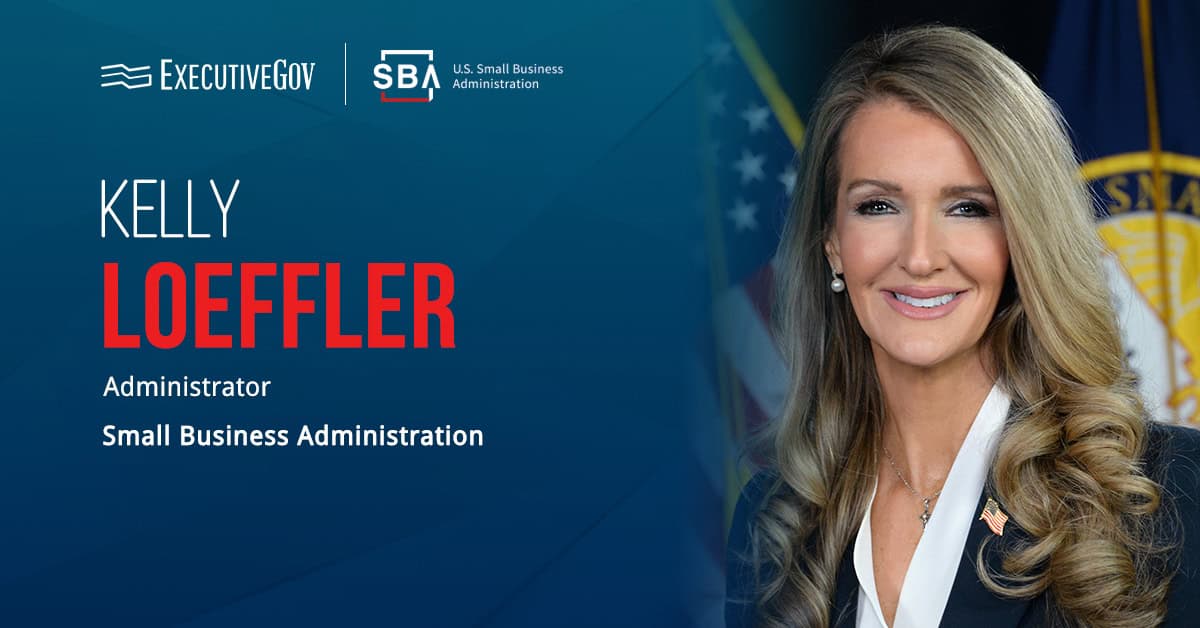
Kelly Loeffler. The SBA administrator commented on the termination proceedings against 628 companies in the 8(a) program.

The Small Business Administration has launched termination proceedings against 628 companies in the 8(a) Business Development Program for failing to provide requested financial records.

Table of Contents

  • Why Is SBA Removing 8(a) Contractors?
  • What Is Driving Increased Oversight of the 8(a) Program?
  • What Other Enforcement Actions Has SBA Taken?
  • What Is the 8(a) Business Development Program?

Why Is SBA Removing 8(a) Contractors?

SBA said Wednesday the firms, which received nearly $850 million in 8(a) contracts between fiscal years 2021 and 2024, refused to submit three years of financial documentation for a comprehensive review aimed at uncovering fraud, pass-through schemes and other compliance issues. They are part of a larger group of 1,091 contractors suspended earlier this year after failing to produce the requested documents.

According to SBA Administrator Kelly Loeffler, a 2026 Wash100 Award recipient, the enforcement action reflects the agency’s effort to strengthen oversight of the federal small business contracting program.

“The message is clear: if you have something to hide, you cannot do business with the federal government,” Loeffler said. “We are ending abuse and DEI discrimination in federal contracting and removing every fraudulent participant that took opportunity away from legitimate and eligible small business owners at taxpayers’ expense.”

What Is Driving Increased Oversight of the 8(a) Program?

In June 2025, SBA initiated a full-scale audit of the program after a Department of Justice investigation uncovered a fraud and bribery scheme involving a former U.S. Agency for International Development contracting officer and more than $550 million in improperly awarded contracts.

The agency previously said the audit’s initial targets are high-value and limited-competition contracts awarded over the past 15 years, with findings to be referred to the SBA Office of Inspector General and DOJ for potential enforcement actions.

What Other Enforcement Actions Has SBA Taken?

The latest terminations follow several other steps taken by SBA to strengthen oversight of the 8(a) program. In February, the agency initiated removal proceedings against 154 Washington, D.C.-based firms after determining they exceeded statutory thresholds for economic disadvantage required to remain eligible for the program. Earlier in the review process, SBA directed approximately 4,300 program participants to submit financial documentation.

The agency said it is working with other federal entities conducting their own reviews of the program, including the Department of War and the Department of the Treasury.

What Is the 8(a) Business Development Program?

The SBA’s 8(a) Business Development Program is designed to help small businesses owned by socially and economically disadvantaged individuals compete for federal contracts. Participating firms could receive sole-source or set-aside contracts intended to support business development and expand opportunities in the federal marketplace.

The current review is intended to ensure that program participants meet eligibility requirements and comply with the contracting rules governing the program’s use.

DoD/Government Technology/Space
Space Force Selects Rice University, University of Arizona Teams for SSTI Remote Sensing Research
by Elodie Collins
Published on March 5, 2026
Space Force logo. The U.S. Space Force announced awardees under its SSTI 4 research program

The U.S. Space Force has selected two teams led by Rice University and the University of Arizona to conduct remote sensing research under the Space Strategic Technology Institute, or STTI, 4.

The university-led teams secured cooperative agreements worth up to $16 million over three and a half years, the Space Force said Wednesday. STTI 4 is part of a series of solicitations issued by the USSF University Consortium over the past two years.

Space Force Selects Rice University, University of Arizona Teams for SSTI Remote Sensing Research

Leaders from the Air Force and the Space Force will discuss the capabilities that airmen and guardians need to combat the growing threats in the air and space domains at the Potomac Officers Club’s 2026 Air and Space Summit on July 30. Get your tickets today.

Table of Contents

  • What Is the Space Strategic Technology Institute Program?
  • What Technologies Has the SSTI Program Produced?

What Is the Space Strategic Technology Institute Program?

SSTI is an initiative to accelerate the transition of new technologies from lab to real-world applications in support of Space Force missions. Launched in 2023, the initiative aims to address scientific and technological challenges in space through partnerships with universities and other research organizations.

“By continuing to support and collaborate with academic institutions, the United States can ensure it remains at the forefront of technological advancement and global leadership in the increasingly contested domain of space,” Stacie Williams, chief science officer at the Space Force, stated.

The SSTI program is expected to produce testbeds, high-fidelity modeling and simulation tools, demonstrations and prototypes that can support future operational capabilities for the Space Force.

What Technologies Has the SSTI Program Produced?

The University Consortium has already facilitated several technology transitions over the past two years, including a $36 million commercial contract awarded to Axiom by Texas A&M University’s in-space operations team and a follow-on $6 million contract tied to technology developed at the University of Texas at Austin.

Additional transitions include two Direct-to-Phase II Small Business Innovation Research awards worth $2.5 million to a University of Michigan team for research on advanced space power and propulsion technologies.

The resulting innovations have contributed to hardware development for the Axiom commercial space station, introduced propulsion technologies to the commercial market and improved algorithms used by the Space Force.

Previous 1 … 13 14 15 16 17 … 2,704 Next
News Briefing
I'm Interested In:
Wash100 Vote Now
Recent Posts
  • NOAA Seeks Proposals for Commercial Microwave Sounder Data Under CDP Program
  • Army’s 3rd Group Converts MICO Into Multidomain Operations Company
  • DOW Partners With Boeing, Lockheed to Boost PAC-3 Seeker Production
  • NRC Selects Matt Pociask as General Counsel, Michael Franovich as Research Director
About

ExecutiveGov, published by Executive Mosaic, is a site dedicated to the news and headlines in the federal government. ExecutiveGov serves as a news source for the hot topics and issues facing federal government departments and agencies such as Gov 2.0, cybersecurity policy, health IT, green IT and national security. We also aim to spotlight various federal government employees and interview key government executives whose impact resonates beyond their agency.

Read More >>

RSS ExecutiveBiz
  • AI Sovereignty Is Key to National Security, Says AMD Global AI Leader
  • Redhorse Secures DOW Acquisition Digitization Prototype OTA
  • RTX BBN Unveils Tool for Covert Network Validation
  • Vantor to Provide NGA With Orbital Intelligence Under New Luno B Contract
  • Oracle Launches Unified AI Data Platform to Accelerate Federal Mission Outcomes
  • Nava Appoints Kelly Feeney as VP of Operations & Automation
RSS GovConWire
  • SpaceX Awarded $178.5M Space Systems Command Task Order for SDA-4 Launches
  • Tanium’s Melissa Bischoping: Agentic AI Could Help Strengthen Federal Network Resilience
  • Boeing Secures $900M Air Force Contract for T-38 Avionics Support
  • Paul Tierney Returns to Dataminr as Head of Public Sector
  • Godspeed Capital Invests in GALT Aerospace to Meet JADC2 Tech Demands
  • USSOCOM Issues $2.7B RFP for SOF Global Services Delivery Contract
Executive Gov

Copyright © 2025
Executive Mosaic
All Rights Reserved

  • Executive Mosaic
  • GovCon Wire
  • ExecutiveBiz
  • GovCon Exec Magazine
  • POC
  • Home
  • Acquisition & Procurement
  • Agencies
    • DoD
    • Intelligence
    • DHS
    • Civilian
    • Space
  • Cybersecurity
  • Technology
  • Executives
    • Profiles
    • Announcements
    • Awards
  • News
  • Articles
  • About
  • Wash100
  • Contact Us
    • Advertising
    • Submit your news
    • Jobs
Go toTop