

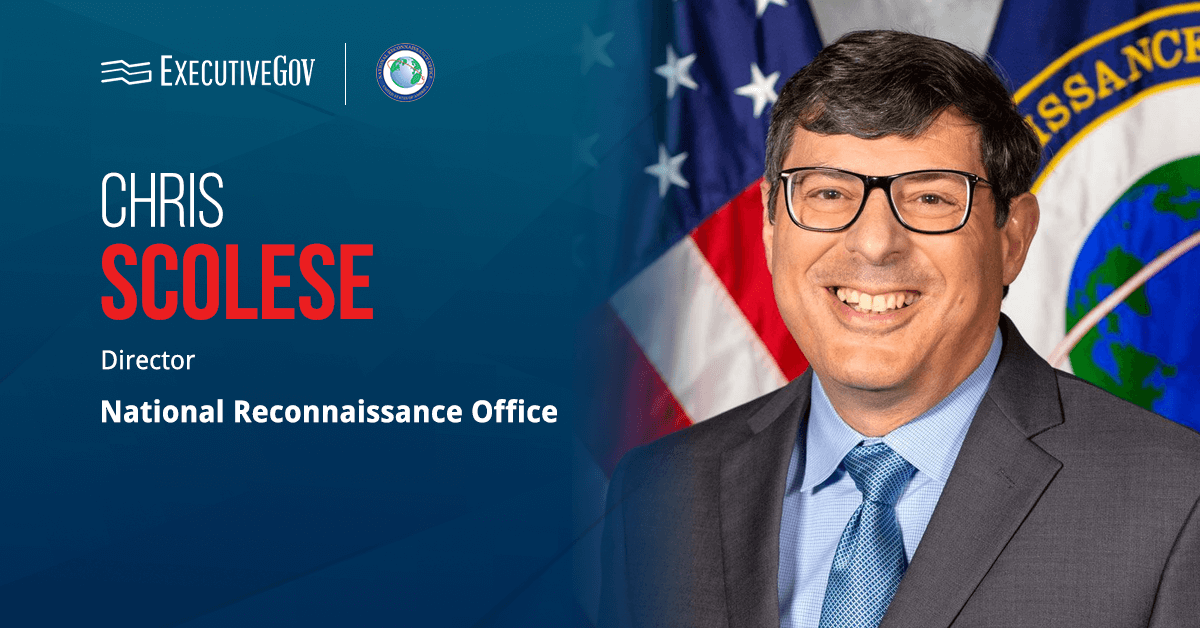
National Reconnaissance Office Director Chris Scolese, a five-time Wash100 Award winner, revealed that the agency is prioritizing advanced technologies, such as artificial intelligence and quantum sensing, to accelerate the delivery and analysis of space-based intelligence data.

AI is rapidly transforming how the government and military process data, as evidenced by the NRO’s focus on leveraging advanced technologies. Learn more at the Potomac Officers Club’s 2026 Artificial Intelligence Summit on March 18. Sign up now!
Table of Contents
How Is the NRO Evolving Its Satellite Architecture?
Speaking at the Goddard Space Science Symposium hosted by the American Astronautical Society on Thursday, Scolese acknowledged that its customers need faster access to information. To meet this need, the NRO launched more than 200 satellites over the past few years to expand the capability, resilience and speed of its overhead systems.
Many of these satellites are part of a proliferated architecture, enabling multiple spacecraft to operate together, providing faster revisit times and increased capacity to collect imagery and intelligence data.
What Role Does Artificial Intelligence Play?
Scolese has been urging government and industry partners to take full advantage of the NRO’s expanding space and ground architecture to facilitate data collection. But with satellite networks gathering more data, processing and delivery have become key priorities. The NRO director noted that advanced computing, particularly AI and machine learning, helps manage, organize and verify data for diverse users, such as military personnel, policymakers, analysts, first responders and environmentalists. Because these users need information in different formats, AI helps organize and present data while ensuring it can be traced and verified.
Why Is NRO Investing in Quantum Sensing Technologies?
Alongside AI, the NRO is exploring quantum sensing technologies and working with commercial companies and universities on related research in areas such as quantum photonics, detectors, radio frequency sensing and laser technologies. According to Scolese, these technologies could enable highly accurate detection and new insights for scientific research and policy analysis.
Related Articles
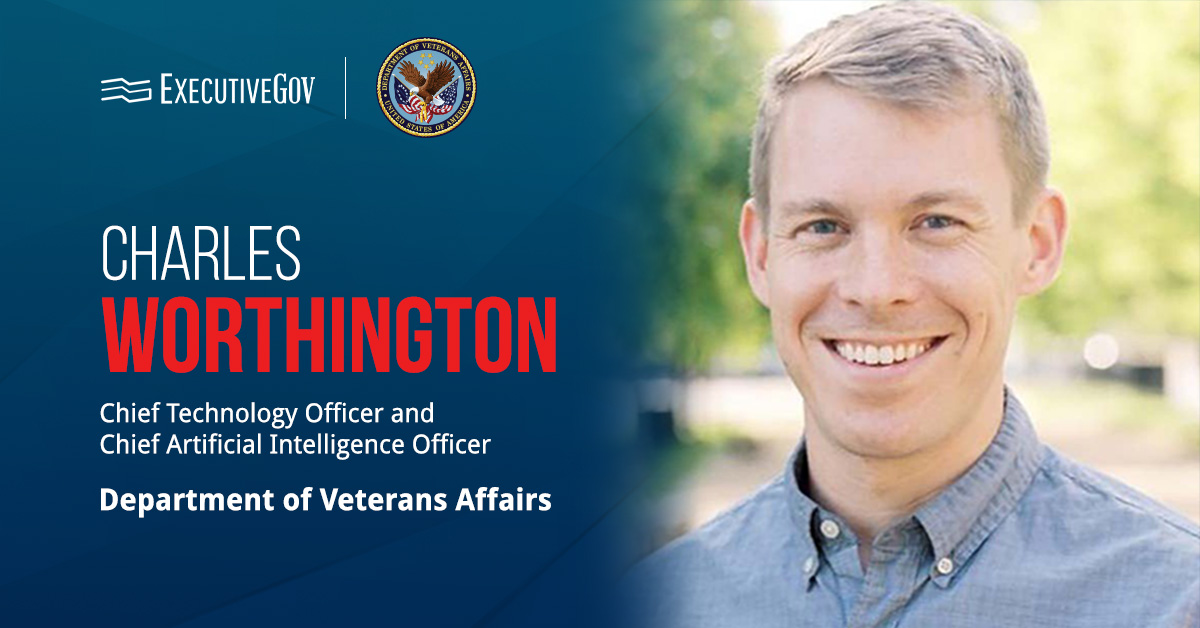
Charles Worthington announced he will step down from his role as chief technology officer and chief artificial intelligence officer at the Department of Veterans Affairs after several years overseeing digital modernization and AI initiatives at VA. As federal leaders highlight the growing role of AI in transforming public-sector systems and workforce productivity, the conversation around AI adoption and innovation continues across government and industry. Join the 2026 Artificial Intelligence Summit on March 18 to connect with leaders shaping the future of AI in the federal landscape. Register now! In a LinkedIn post published Thursday, Worthington said serving at VA has
The U.S. Army is advancing efforts to modernize its unmanned aircraft capabilities to support multidomain operations through the Group 4+ Short/Vertical Takeoff and Landing, or S/VTOL, Challenge, DVIDS reported Monday. The Army’s latest challenge highlights the service’s push to modernize unmanned aviation and strengthen collaboration with industry. Join defense leaders and technology innovators at the 2026 Army Summit on June 18 to hear firsthand how the service is advancing future capabilities. Book your spot now! The challenge will involve collaboration with industry partners to inform acquisition, development and procurement strategies for future unmanned aircraft platforms. The Portfolio Acquisition Executive, or
The Federal Aviation Administration has issued a request for information seeking industry partners capable of supporting the transition of the National Airspace System to post-quantum cryptography, or PQC. The FAA’s modernization efforts reflect the broader government push to upgrade legacy systems, a topic that will take center stage at Potomac Officers Club’s 2026 Digital Transformation Summit on April 22. Register now. According to the sources sought notice posted on SAM.gov Tuesday, the FAA is seeking potential vendors to move its air traffic control infrastructure, as well as its IT and business systems to PQC as part of the agency’s modernization effort.