

NASA has unveiled a revised exploration schedule for its Artemis program, as part of efforts to return U.S. astronauts to the Moon and sustain long-term operations.

The Potomac Officers Club’s 2026 Air and Space Summit on July 30 will bring together Air Force, Space Force and industry leaders to discuss the technologies and strategies shaping the next era of air and space advancement. Register now!
The agency said Friday that it aims to increase mission frequency, add a new Artemis mission in 2027 and conduct at least one lunar landing per year beginning in 2028.
Table of Contents
What Changes Are Planned for Artemis Missions?
Under the updated plan, Artemis III mission will shift to 2027 and focus on validating systems in low Earth orbit, setting the stage for a planned lunar landing on Artemis IV in 2028. The flight could include rendezvous and docking with commercial landers from SpaceX and Blue Origin, along with in-space testing of life support, propulsion, communications and the Extravehicular Activity spacesuits. The agency will also cancel previously planned upgrades to the Space Launch System, according to SpaceNews. NASA intends to maintain a consistent SLS and Orion configuration to reduce technical risk and preserve lessons learned from earlier missions.
How Will NASA Support the Accelerated Schedule?
According to NASA, the workforce directive is central to advancing the accelerated schedule. The directive is designed to reinforce core civil service competencies and deepen integrated development efforts with Artemis industry partners to enhance safety and reliability while increasing launch cadence.
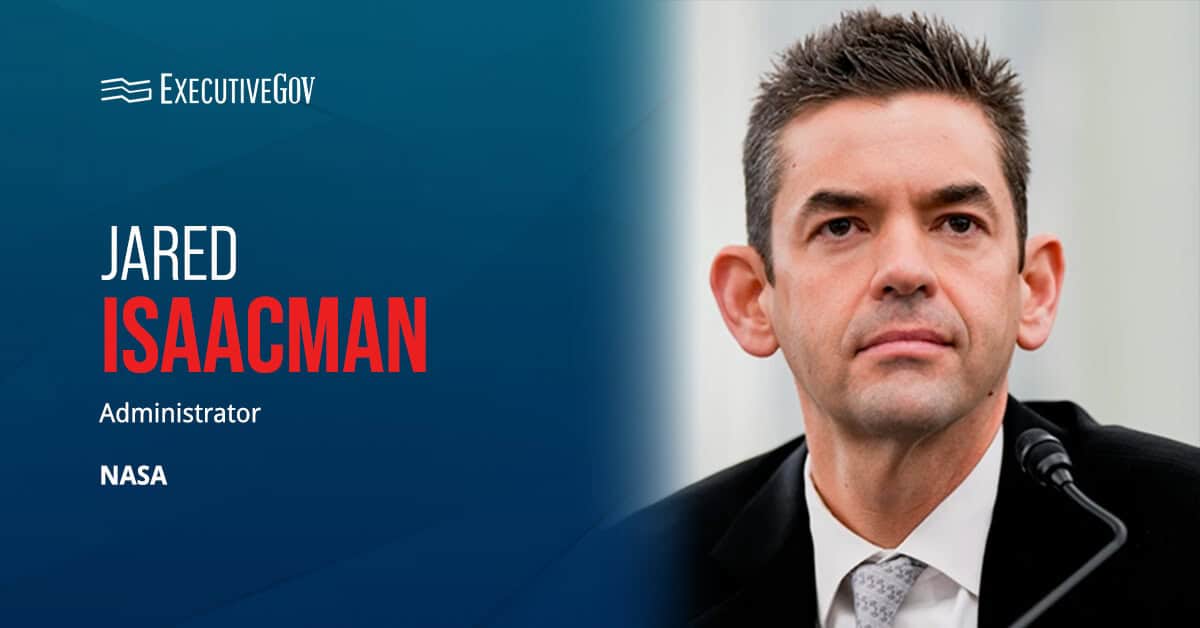
“NASA must standardize its approach, increase flight rate safely, and execute on the President’s national space policy. With credible competition from our greatest geopolitical adversary increasing by the day, we need to move faster, eliminate delays, and achieve our objectives,” said NASA Administrator Jared Isaacman. “Standardizing vehicle configuration, increasing flight rate and progressing through objectives in a logical, phased approach, is how we achieved the near-impossible in 1969 and it is how we will do it again,” added the 2026 Wash100 Award winner.
Related Articles

The National Oceanic and Atmospheric Administration has released a request for proposals for a commercial microwave sounder data buy under its Commercial Data Purchase program. What Is NOAA Requesting From Industry? NOAA said Wednesday it is seeking commercially available passive microwave sounder products to support the generation of atmospheric temperature and moisture profiles. The data will be used to enhance land, hydrology and precipitation products for operational weather models and applications. Interested vendors can submit their proposals until April 22. This latest solicitation follows previous MWS data contracts awarded to Tomorrow.io and Orbital Micro Systems for the agency’s latest Commercial Weather

The 3rd Special Forces Group (Airborne) is transforming its legacy military intelligence company into a multidomain operations, or MDO, company to support evolving battlefield requirements. The U.S. Army said Wednesday the transition will strengthen special operations capabilities and align with the service’s broader shift toward multidomain operations. Army leaders such as Brig. Gen. Shane Taylor, program executive officer, command, control, communications and networks, will participate in insightful panel discussions at the Potomac Officers Club’s 2026 Army Summit on June 18. Tickets are available here. How Is MICO Transforming Into an MDO Company? Under the new structure, intelligence and electronic warfare

The Department of War has collaborated with Boeing and Lockheed Martin to expand the production capacity of seekers, a critical component of the Patriot Advanced Capability-3 Missile Segment Enhancement, or PAC-3 MSE, system. The expansion supports the government’s Arsenal of Freedom initiative, the War Department said Wednesday. What Does the Agreement Cover? The seven-year agreement with Boeing, which produces the advanced seeker for the PAC-3, supports a concurrent deal with prime contractor Lockheed Martin to more than triple the production of PAC-3 MSE all-up rounds. This move implements the department’s Acquisition Transformation Strategy, which shifts focus toward direct engagement with suppliers at every tier