

The Federal Aviation Administration has completed the transition to a streamlined licensing framework for commercial space launch and reentry operations, consolidating approvals under a single rule to reduce regulatory complexity for industry.
Under the updated approach, all commercial space licensing will now fall under Part 450, replacing multiple legacy regulations that previously governed launch and reentry activities, the FAA said Tuesday.

The Potomac Officers Club’s 2026 Air and Space Summit, scheduled for July 30, will bring together Air Force, Space Force and industry leaders to discuss evolving priorities across the air and space domains, including regulatory developments, technology adoption and operational challenges shaping the sector. Register now to join the conversation.
Table of Contents
What Changes Under Part 450?
The Part 450 rule introduces a performance-based framework that provides operators with greater flexibility in meeting safety requirements while reducing administrative and cost burdens. It allows companies to operate under a single license covering multiple missions, vehicle configurations, and launch or reentry sites, eliminating the need to seek separate approvals for each variation. The rule also reduces the number of licensing actions required over time, enabling operators to scale launch activities more efficiently.
Which Companies Have Transitioned?
Several major commercial space providers transitioned their legacy licenses to Part 450 by the March 9 deadline, including Blue Origin, SpaceX, United Launch Alliance, Rocket Lab and Firefly Aerospace.
FAA said it has issued 14 licenses under the rule since it took effect in 2021.
How Does This Fit Broader Policy Efforts?
The shift aligns with broader federal efforts to streamline regulations and support growth in the commercial space sector.
A 2025 executive order directed federal agencies to accelerate licensing and environmental reviews, eliminate redundant requirements and improve coordination to support spaceport development and commercial space activity.
In 2024, the FAA took steps to refine the Part 450 rule through an industry-focused advisory committee. It also initiated efforts to modernize internal licensing processes, including exploring automation tools.
Why It Matters for Commercial Space Operations
The move to a single licensing framework reflects the FAA’s effort to adapt oversight to a growing launch market, where operators are conducting more frequent and varied missions.
By reducing regulatory fragmentation and enabling more flexible licensing, the agency aims to support a higher launch cadence while maintaining public safety standards.
Related Articles
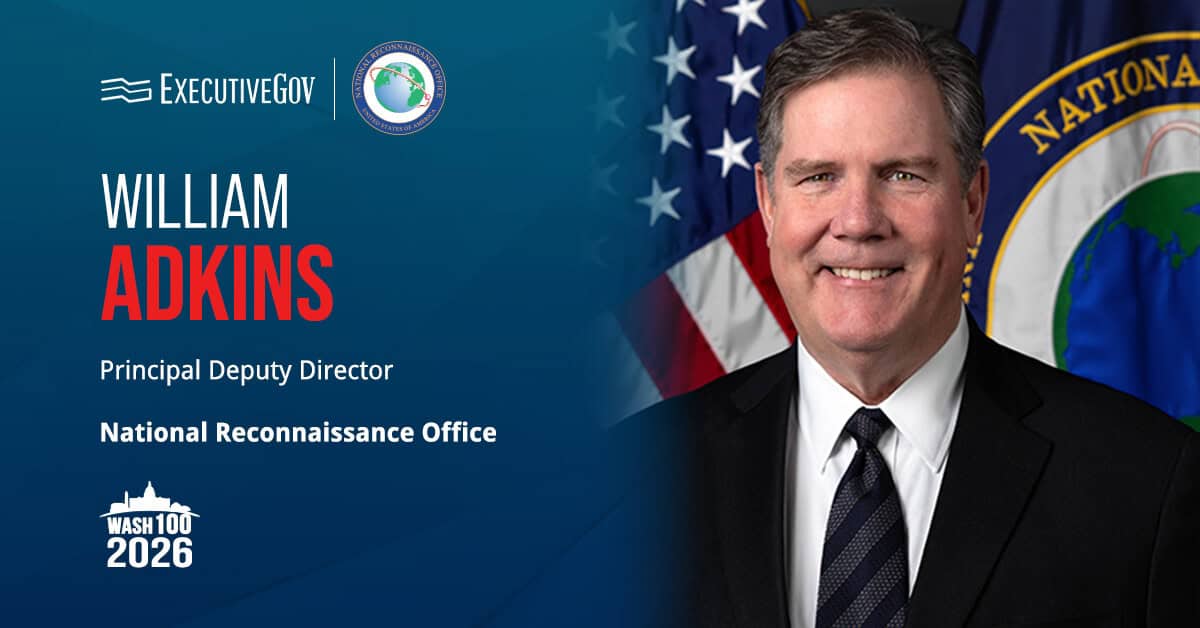
The National Reconnaissance Office’s proliferated architecture recorded more than 400,000 collections in 2025, William Adkins, principal deputy director at NRO, said Tuesday at the annual Space Symposium. NRO’s progress on its proliferated architecture comes as government and industry leaders prepare to discuss the future of space capabilities at major forums. Register now for the 2026 Air and Space Summit and listen to experts as they discuss trends and emerging technologies shaping national security missions across the air and space domains. Adkins, a 2026 Wash100 awardee, said the architecture is now operational and exceeding expectations two years after the agency introduced

The Department of Energy’s Office of Cybersecurity, Energy Security and Emergency Response and Lawrence Livermore National Laboratory have introduced an artificial intelligence testbed designed to evaluate the cybersecurity and reliability of AI models used in the energy sector. DOE’s latest push to strengthen AI cybersecurity in the energy sector highlights the growing urgency around securing advanced technologies that support critical infrastructure. Sign up now for the 2026 Digital Transformation Summit on April 22 to hear experts discuss the use of AI in high-security federal environments, mission engineering, enterprise IT and other topics shaping the digital landscape. What Is the Mjölnir
The Defense Advanced Research Projects Agency has advanced its Heterogeneous Architectures for Quantum, or HARQ, program with 19 performer teams from 15 organizations tasked with developing software and hardware frameworks that enable different quantum computing technologies to operate within a single system. The effort is organized around two parallel workstreams, DARPA said Tuesday. The Multi-qubit Optimized Software Architecture through Interconnected Compilation, or MOSAIC, track focuses on building software frameworks and circuit compilers that optimize quantum algorithms by assigning tasks across multiple qubit types. The goal is to produce more efficient “mosaic” circuits than those generated by single-platform systems. The second